Local authority contracting: the councils we work for
Local authority contracting is work we know inside out. We’re main contractors for local authorities including Hertsmere Borough Council, the London Borough of Barnet, Tower Hamlets Council and Brentwood Borough Council. Brentwood is our home borough: we’re based in Blackmore, a short drive from Chelmsford.
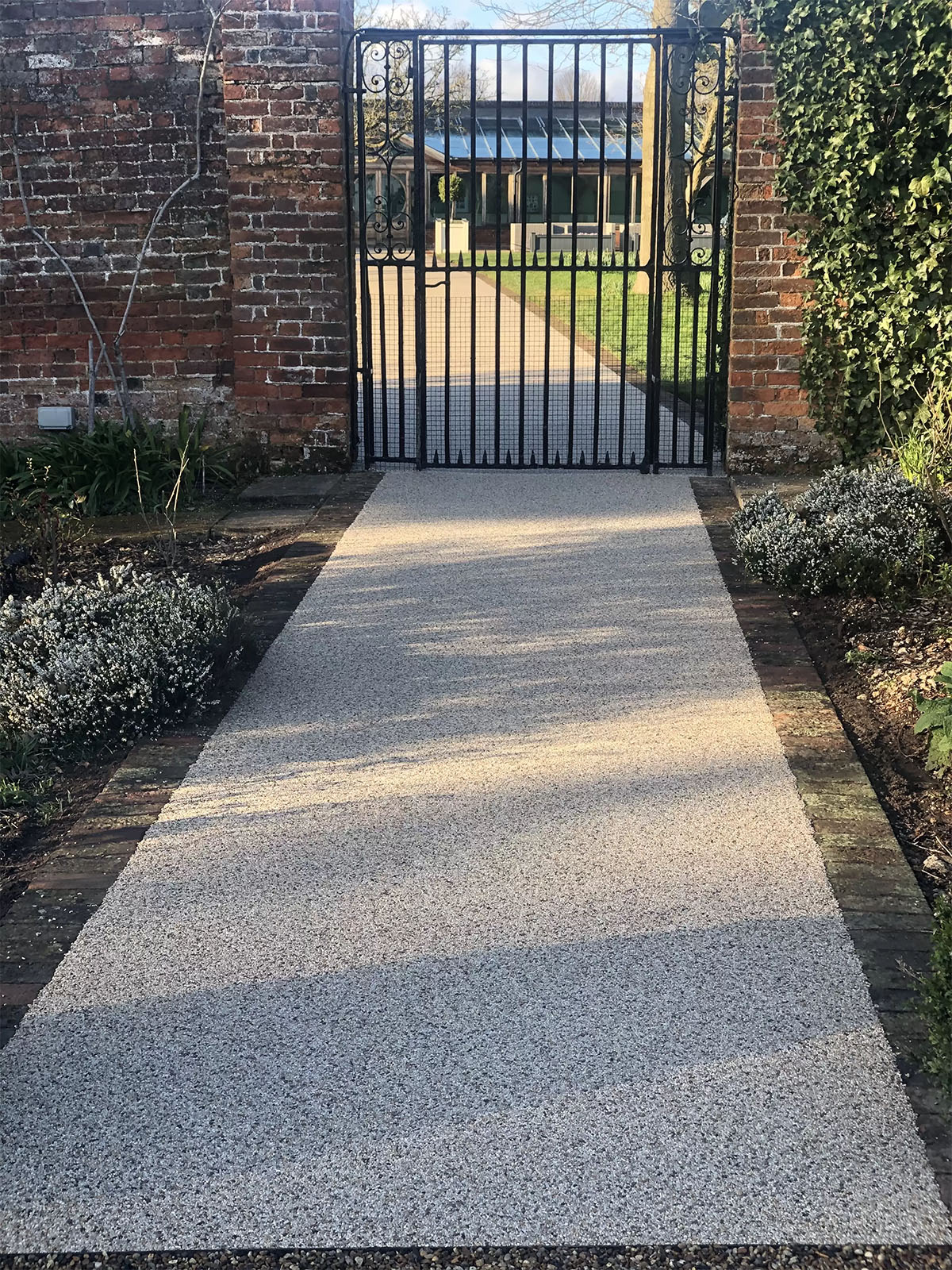
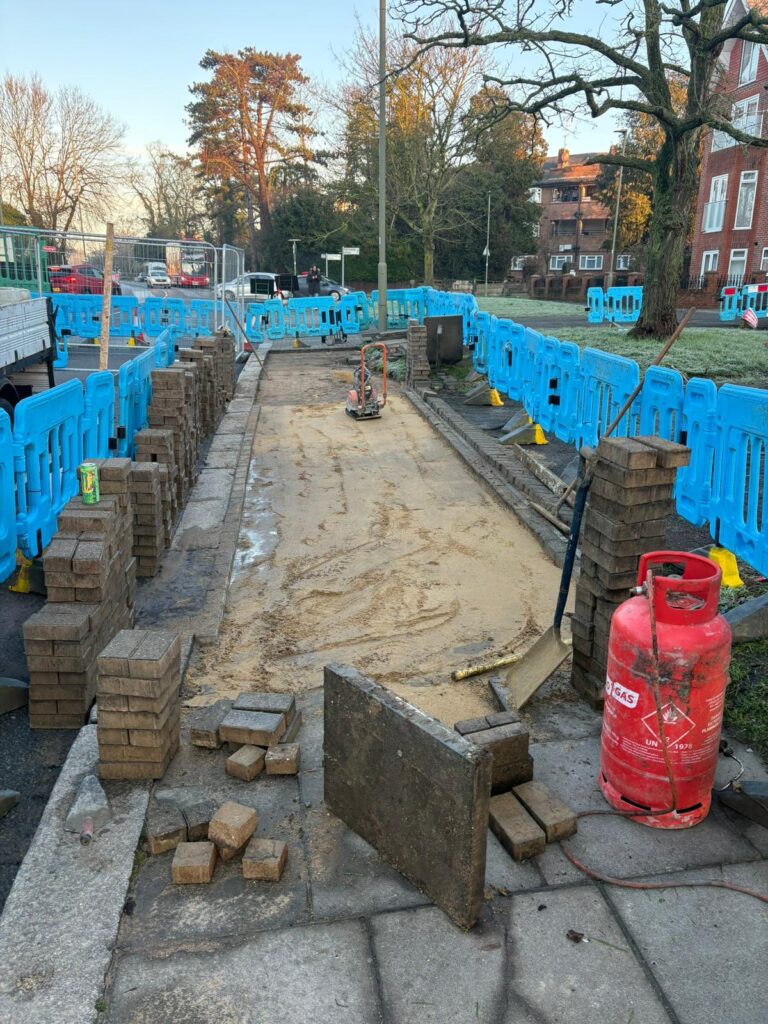
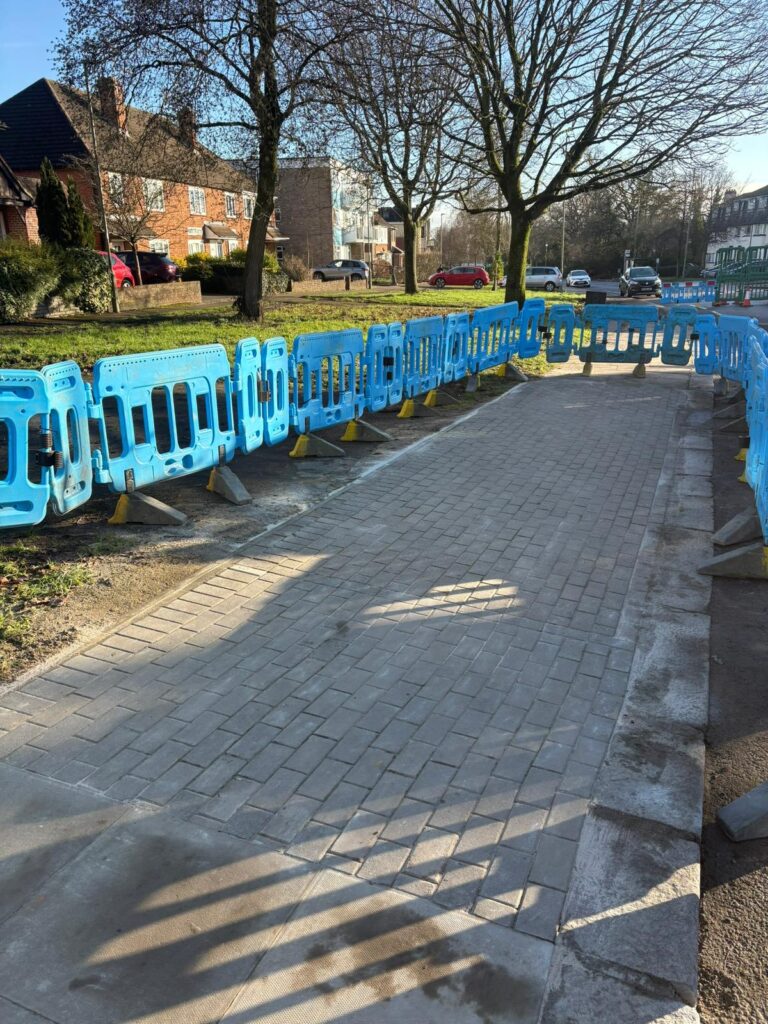
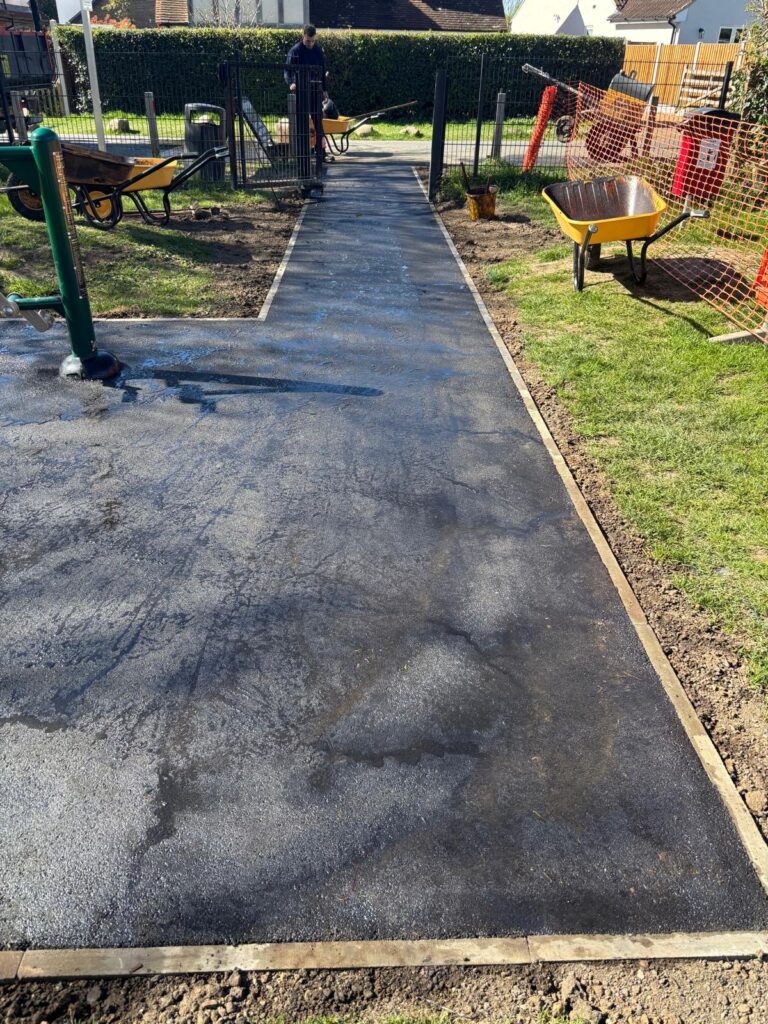
The work is mostly the unglamorous stuff that keeps a borough moving. Footpath reconstruction. Carriageway patching and reinstatement. Block paved footpaths lifted and relaid, slabs relaid where they meet block paving, and new tarmac entrances to footpaths. Some of it is done under a full road closure, some under traffic management, and some of it at night.
We’re a family run business with over 50 years in surfacing. The people you speak to about the job are the ones who answer for it, and that’s how we approach local authority contracting whether the scheme is a single footpath or a whole street.
On this page
Approved and insured for public sector work
Procurement teams need the paperwork before they need the price, so here it is in one place:
- Constructionline approved, the supplier prequalification scheme many councils use (see Constructionline)
- SafeContractor approved
- CHAS accredited
- CIRAS and RISQS registered (railway industry schemes)
- Public liability insurance of ten million pounds
Most domestic driveway firms don’t carry the rail and civils schemes. We hold them because our council and commercial clients ask for them. They’re also the checks a school business manager or a housing association should be asking any contractor for, whoever they hire.
Road surfacing contractors working to council specification
Road surfacing contractors on council work don’t get to pick their own mix. It’s specified, and that suits us, because it’s how we’d do it anyway. Typical materials on our public sector jobs:
- 6mm DBM (dense bitumen macadam): our standard for footpaths.
- 10mm DBM: carriageways and car parks.
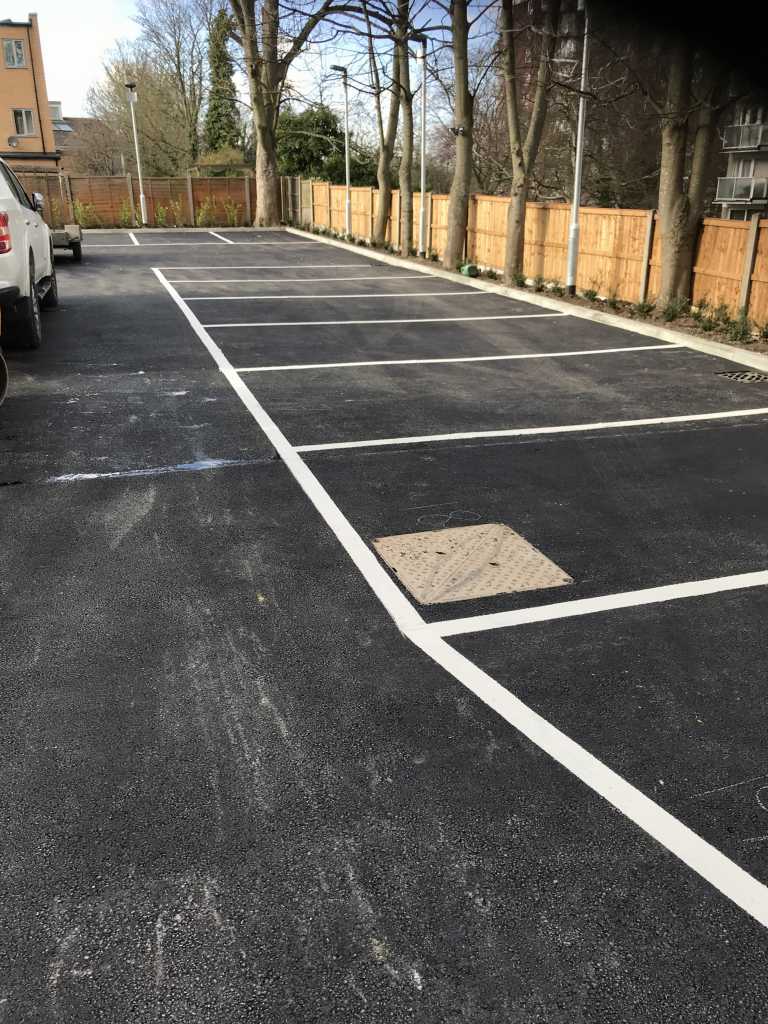
- 55/10 HRA mix (hot rolled, dense and hard wearing): a heavier duty surface for car parks and repairs.
- Bitumen overbanding on all joints, every job, to keep water out of the seams.
- Thermoplastic lining for road markings, bays and hatching.
Below the surface it’s the same discipline: dig out to the right depth, a compacted MOT Type 1 sub-base, a base course, then the wearing course. Block paved footpaths are lifted, the old screed removed, a new screed laid and the blocks relaid and jointed.
If you manage highways, the UK Roads Liaison Group code of practice sets out the inspection and repair framework most authorities work to, and it’s a sensible reference when you’re writing a specification.
Working on live roads and footpaths
Public sector surfacing never happens on an empty site. There are pedestrians, buses, bin lorries, parked cars and residents who need to get off their driveways for the school run. Planning for them is half the job.
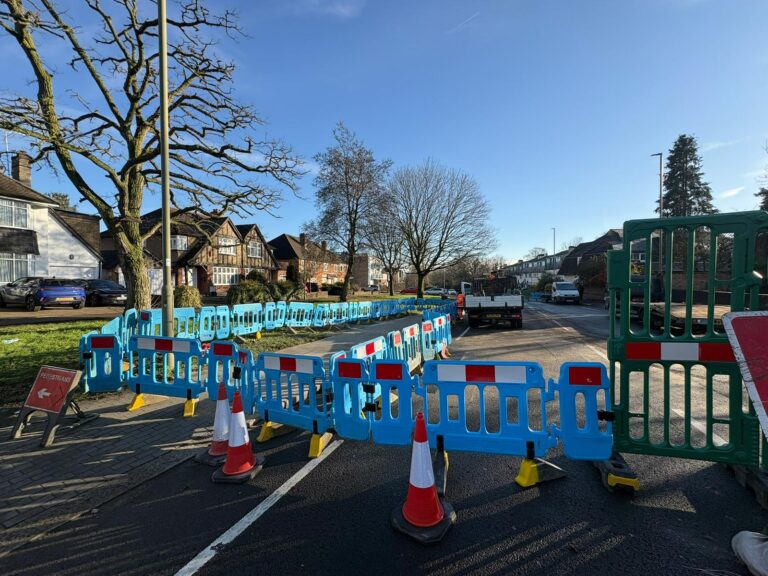
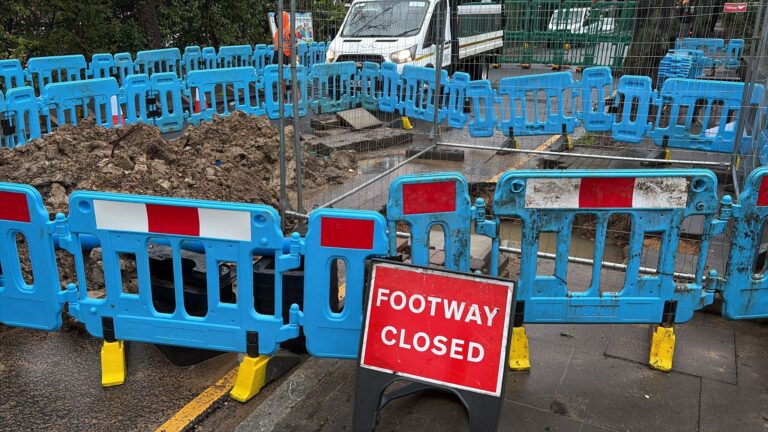
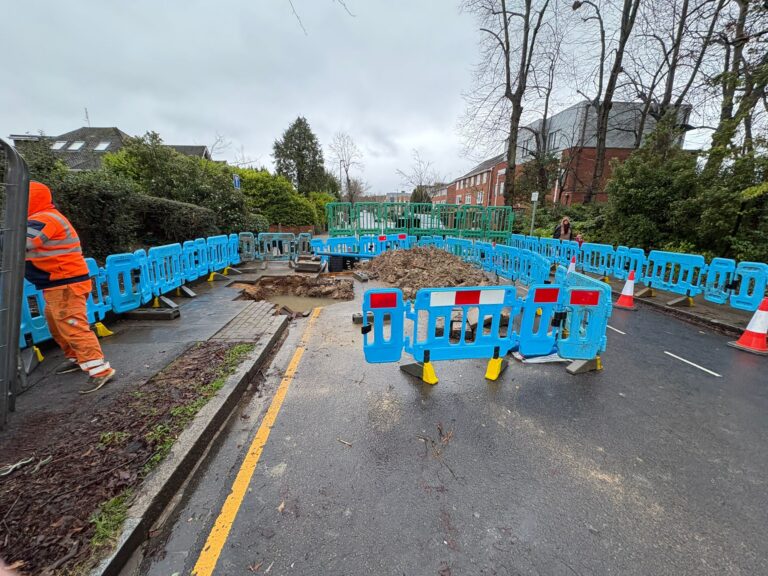
We’ve carried out road and footpath reconstruction under full road closures, a tarmac road repair in Chelmsford with traffic management in place, and night work on roads in London. On footpath jobs we plan a safe route for pedestrians, keep the site barriered, and leave it swept and tidy at the end of each day.
Everything runs under HSE construction guidance, with risk assessments and method statements sorted before we start. Residents are told what’s happening and when, and access is kept open wherever the job allows. Nobody remembers a footpath scheme that went smoothly. They remember the one that blocked them in for a day.
Footpath reconstruction, step by step
Footpaths make up a big share of our local authority contracting, and they’re where shortcuts show fastest. A path that’s been patched over a soft base dips within a year, and a trip on a lifted edge is the kind of claim no council wants.
On a tarmac footpath the sequence is the same every time:
- Set up barriers and a safe pedestrian route, with access kept to driveways and front doors.
- Break out the old surface and dig out to the depth the specification asks for.
- Lay and compact a MOT Type 1 sub-base, checking levels so water runs to the kerb or the gullies.
- Lay the base course, then 6mm DBM as the wearing course, rolled tight.
- Seal every joint with bitumen overbanding, including where new tarmac meets old.
- Reinstate anything we’ve disturbed, sweep up and open the path.
Block paved or slab footpaths are different work. We lift the blocks, remove the old screed, lay a new screed, relay the blocks and joint them. Where slabs meet block paving we relay the slabs to line and level so there’s no lip for a pushchair wheel or a walking stick to catch. And where a footpath meets the road or a car park, we lay new tarmac entrances so the transition is flush.
What procurement teams usually ask us for
Before a council, school or housing provider takes on any road surfacing contractors, there’s a checklist to get through. We’d rather make that easy than slow it down. On request we can provide:
- Copies of our Constructionline, SafeContractor, CHAS, CIRAS and RISQS approvals
- Our public liability insurance certificate
- Risk assessments and method statements for the scheme
- A written programme showing phasing, closures or traffic management
- Photos and details of comparable jobs, such as the Ongar car park or the Ashtead Plant Hire depot among others
If your framework or tender asks for something that isn’t on that list, tell us early. Most of it we’ll already have; the rest we’d rather sort out at the start than hold up a contract award.
Schools, housing providers and management companies
Not every public sector client is a council highways team. Schools, academy trusts, housing associations and estate management companies all look after footpaths, car parks and access roads, and they all have people living, learning or working on site while we’re there.
For schools, the obvious answer is to work in the holidays, and we plan around term dates wherever the programme allows. Where it can’t wait, we fence the work area off and agree delivery times that keep lorries away from drop off and pick up.
For housing providers and estate roads, the job is mostly about residents. We agree with you how they’ll be told, when parking will be affected and how long for, and we phase the work so people can still get in and out. Older residents and anyone with mobility needs get a safe route that doesn’t involve walking round a closure.
Because we already work to council paperwork and specification, the road surfacing contractors you appoint for a private estate can be held to the same standard as the authority next door. That’s useful when an estate road might be put forward for adoption one day.
The same standard for private roads and estates in Chelmsford
Plenty of people looking for road surfacing contractors in Chelmsford aren’t councils at all. They’re residents on an unadopted road, a management company with an estate road, a farm with a long access lane, or a business with a service yard. Those roads belong to the owners, not the council, and so do the repairs.
We describe ourselves as main contractors for local authorities, available to the public at reasonable rates, and it means exactly that: the same mixes, the same overbanding and the same sub-base we lay for councils, on your private road.
Commercial jobs we can point to include an 840 m² car park resurfacing in Ongar, finished in 55/10 HRA with thermoplastic line marking, and a 10,000 m² depot for Ashtead Plant Hire. Closer to Chelmsford we’ve laid a fresh tarmac surface for allotments in Witham. For smaller private roads, see our road repairs in Chelmsford and pothole repairs pages.
Who looks after which road in Chelmsford
A quick guide, because it saves a lot of wasted phone calls. Public roads, pavements and public footpaths in Chelmsford are looked after by Essex Highways, the highway authority for the county. If there’s a pothole or a broken kerb on a public road, report it to them. We can’t be hired privately to fix an adopted road.
Unadopted roads, private estate roads, car parks, school grounds, housing association land and business premises are the owner’s responsibility. That’s where road surfacing contractors like us come in, either directly or through a council or housing provider’s own procurement.
How we price and run a public sector job
Councils usually come to us with a specification and a schedule of works; private clients usually come with a problem. Either way it starts with a site visit. We measure, check the existing construction, look at drainage and access, and work out what traffic management the job needs.
You get a written price and a programme. On site the order is predictable: set up traffic management or the closure, break out, dig out to depth, lay and compact the sub-base, base course, wearing course and bitumen overbanding, then lining and reinstatement of anything we disturbed. We clear up as we go and hand the area back nice and tidy.
There’s no published price for local authority contracting, because no two schemes are alike. For a free, no obligation site survey, call 01277 546016 or contact us here. Our main contracting for local authorities page has more on the work we do across Essex, London, Kent and Hertfordshire.
Local Authority Contracting in Chelmsford: your questions
Are you Constructionline approved?
Yes. We’re Constructionline approved and SafeContractor approved, CHAS accredited, and registered with CIRAS and RISQS for railway industry work. We also carry ten million pounds of public liability insurance.
Which councils do you work for?
We’re main contractors for local authorities including Hertsmere Borough Council, the London Borough of Barnet, Tower Hamlets Council and Brentwood Borough Council.
Can you work at night or under road closures?
Yes. We’ve carried out road and footpath reconstruction under full road closures, road repairs in Chelmsford under traffic management, and night work on roads in London.
Do you surface private and unadopted roads?
Yes. Unadopted roads, estate roads, access lanes and business roads belong to their owners, and we resurface and repair them to the same specification we use for councils.
Who do I contact about a pothole on a public road in Chelmsford?
Essex Highways, the highway authority for public roads and pavements in the county. We can only repair roads and surfaces on private land, or work instructed by the authority itself.
What materials do you use on footpaths and carriageways?
6mm DBM is our footpath standard, with 10mm DBM on carriageways and car parks and 55/10 HRA for heavier duty surfaces. Every job gets bitumen overbanding on the joints.