Resin driveways in Chelmsford: bound or bonded?
There are two kinds of resin driveway. They sound alike and behave nothing alike, and a fair few firms use the names as if they’re the same thing. They aren’t, and the difference decides how your drive looks, how it drains and how long it lasts.
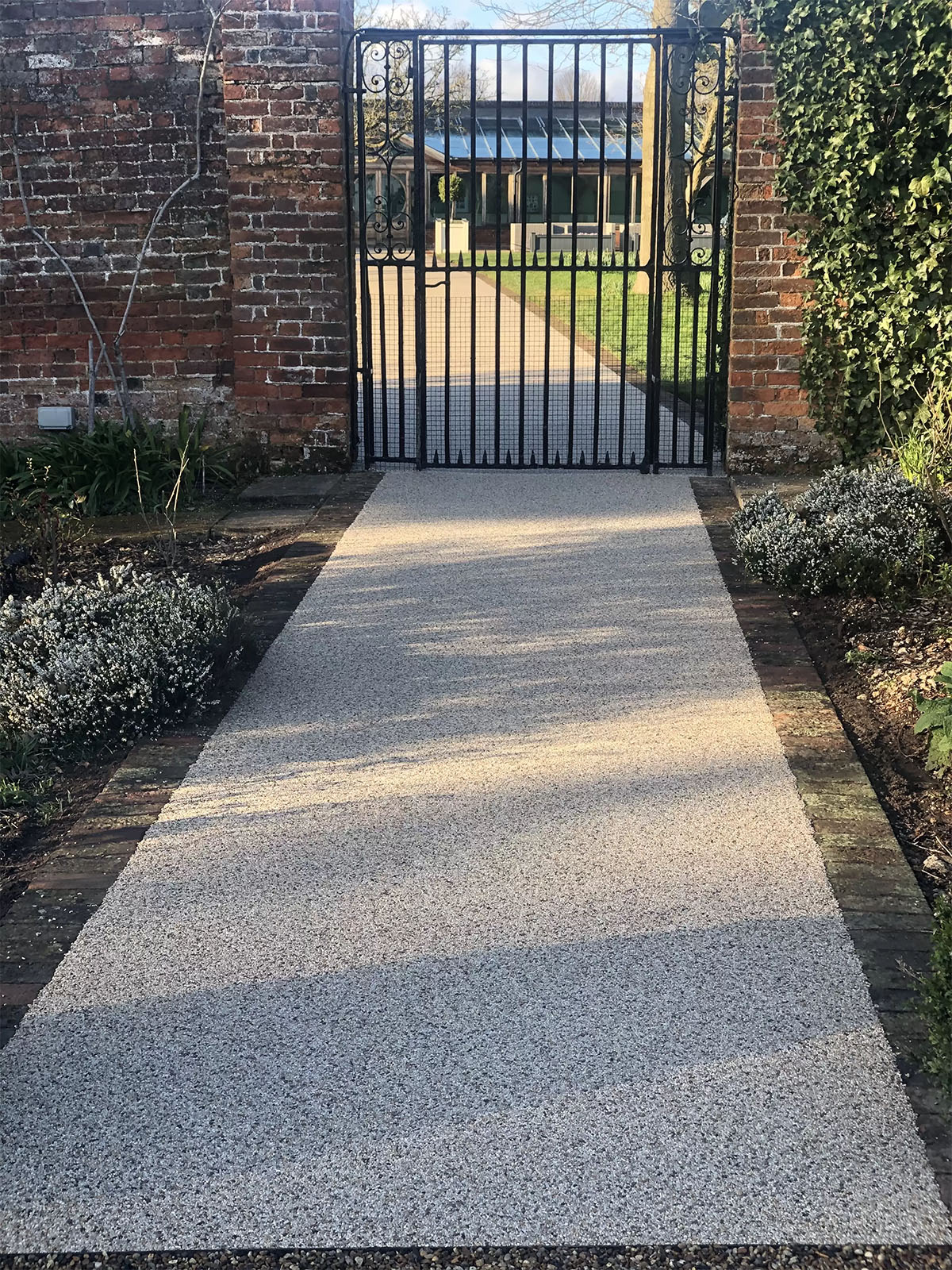
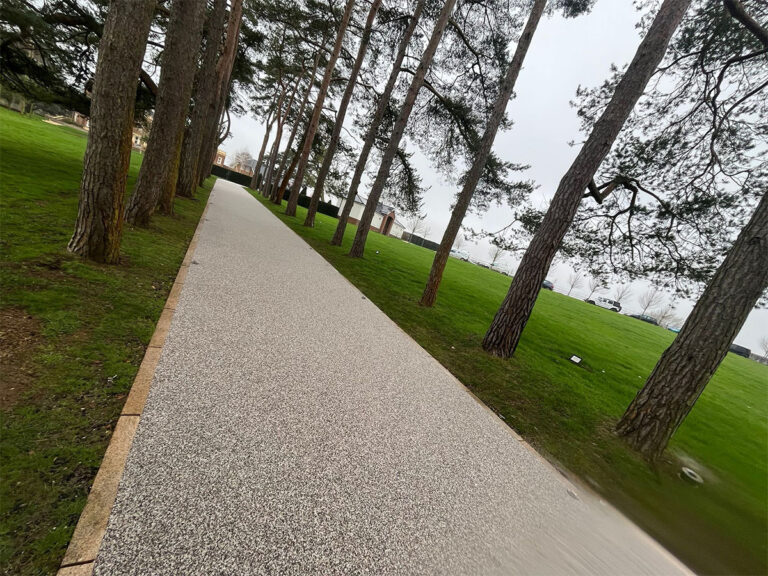
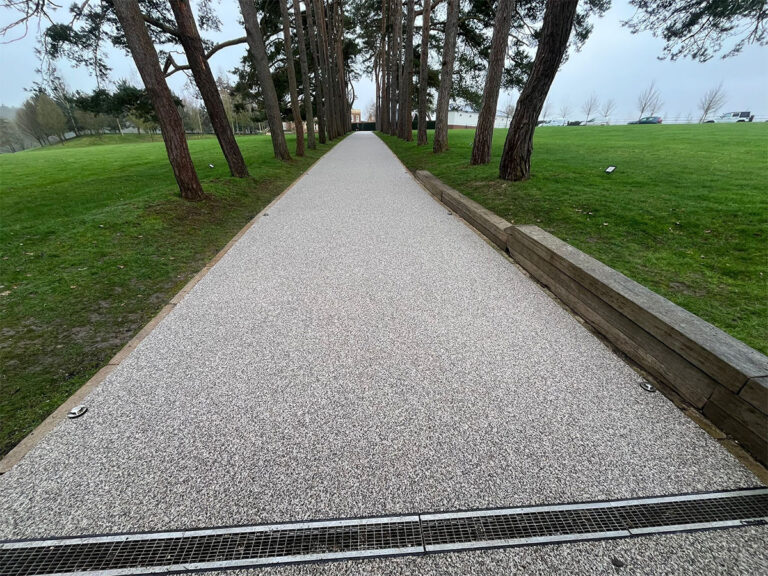
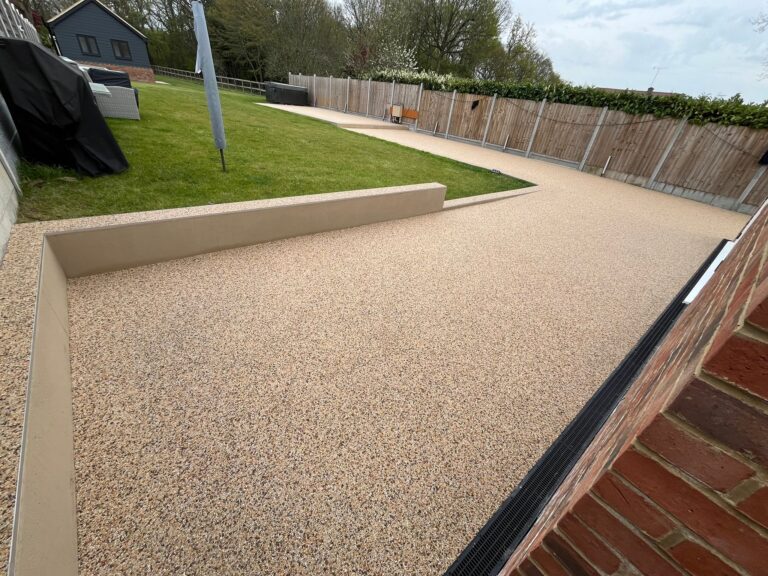
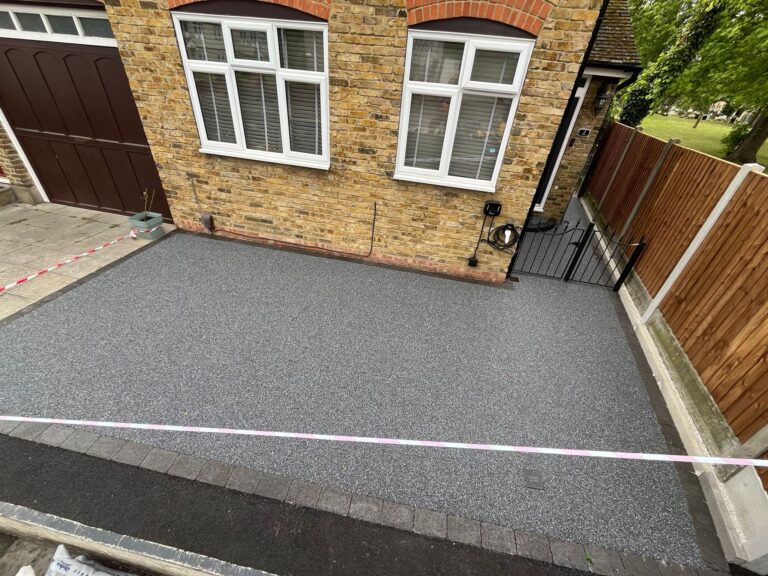
Resin bound is natural stone mixed right through clear resin, then trowelled flat by hand. Every stone is coated, nothing’s loose, and water drains through the surface. That’s our standard for driveways, paths and pool surrounds, and on a proper base it should give you 15 to 25 years.
Resin bonded is a layer of resin spread over the base with loose stone scattered on top and rolled in. The stones sit on the surface rather than in it, so you get a textured, very grippy finish. Over time some of that stone will come loose. Expect 10 to 15 years.
So which? For a flat or gently sloping Chelmsford drive, resin bound nearly every time. For a steep drive, a ramp, or a path where grip matters more than a smooth finish, we’d steer you to bonded. If a quote just says resin driveway and doesn’t say which one, ask.
On this page
What goes under a resin driveway, and why cheap ones crack
A resin surface is a thin top layer, so the drive is only ever as good as what it’s sitting on, and the base is exactly where a cheap job saves its money.
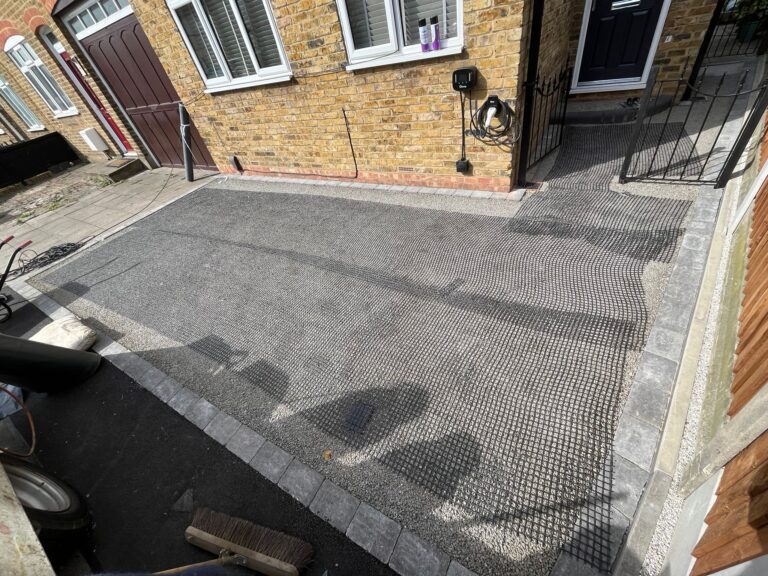
Here’s how we build one. We dig out and look at the ground first. A lot of Essex sits on clay, which holds water and shifts as it wets and dries, so we don’t skimp on the dig. Then comes an MOT Type 1 sub-base (crushed stone, compacted hard), a tarmac layer to lay onto where the job needs one, and an anti-crack membrane (a geotextile sheet that stops cracks in the base coming up through the resin). Then the border, then the resin.
That membrane goes under every resin bound driveway we lay. It isn’t an optional extra on our quotes.
What a cheap job usually does is put resin straight over old cracked concrete or tired tarmac with no membrane. It looks lovely for a summer. Then the cracks underneath come through in the same places, and there’s no tidy way to patch them. Sometimes an existing surface really is sound enough to go over, and if yours is, we’ll say so at the survey.
Resin driveway prices in Chelmsford
Our resin bound driveways start from £50 per m². That’s an indicative starting price, not a quote. The final figure depends on the area, access, how much ground preparation your drive needs and the spec you choose, such as the stone blend and the border. We give you a fixed quote in writing after a free, no obligation survey.
Nine times out of ten, the biggest swing in price isn’t the resin. It’s whether we’re digging out and building a new base or laying onto a sound existing one, and how much border there is to set by hand. A long, narrow drive with borders down both sides has a lot more edge to it than a square one the same size.
We price resin bonded at survey. If you’d like to spread the cost of either, our finance options are worth a look.
If it’s the cheapest smooth driveway you’re after, that’s usually tarmac, from £25 per m² on the same terms. Resin bound costs more because it’s a hand finished decorative surface going over much the same groundwork. Our tarmac driveways in Chelmsford page covers the other side of that choice.
The pitfalls of resin driveways, honestly
Search for the pitfalls of resin driveways and you’ll find a long list. Most of it comes down to how the drive was laid, not the material. The ones worth knowing:
- Weather. We need it dry and above about 5°C to lay resin. In a wet Essex winter that can mean moving your date. We’d rather do that than lay it in the wrong conditions.
- Cracks from below. Covered above. No membrane over a tired base, and the cracks will come back through.
- Loose stone on bonded. Resin bonded will shed some stone over the years. If that would drive you mad, have resin bound.
- Time off the drive. You can walk on resin bound after 12 to 24 hours and drive on it after 48 to 72. Plan where the cars go for a few days.
- Drainage assumptions. Resin bound lets water through, but if it’s laid onto a solid base, the water still has to go somewhere. More on that below.
None of those are reasons not to have a resin driveway. They’re reasons to ask a contractor how they’ll deal with each one.
Borders and finishes we’ve laid near Chelmsford
The border holds the resin edge and frames the whole drive and marks the boundaries, so it’s worth choosing with the house in mind. Three we’ve used on jobs not far from Chelmsford:
- Brindle tegular block (a concrete block with a chamfered top edge, in a mixed brindle colour). We used it on a resin bound gravel driveway in South Woodham Ferrers, Essex, with anti-crack membrane throughout.
- Granite sett (small natural stone blocks, around 100mm, pointed with mortar). That’s what we laid round a resin bound driveway in High Roding, Essex.
- Charcoal block, for a crisp dark edge. We finished a resin driveway in Ongar with one, over a tarmac sub-base and anti-crack membrane.
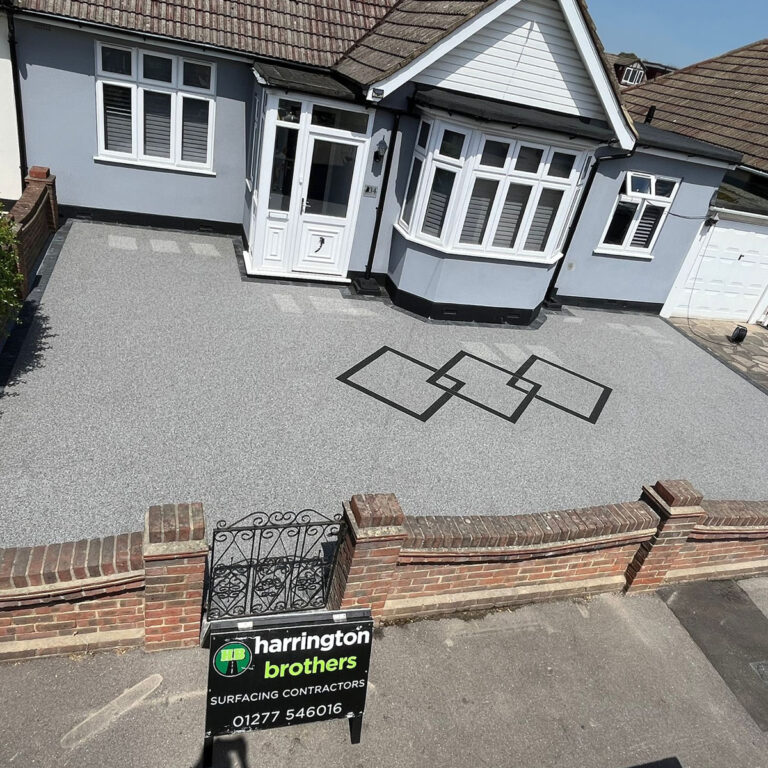
For the stone itself there are plenty of blends. The long resin drive in Hatfield Heath in our gallery is a Richmond blend, and we’ll talk colours through with you at the survey. If you fancy something different, we’ve set a diamond and an eight pointed star into resin drives as focal designs. Our main resin driveways page has more of that work.
What happens on the days we’re with you
Most domestic driveways take 2 to 5 days, from the first dig to the last sweep up, depending on the size and how much digging there is. We agree the dates with you beforehand.
Breaking out is the noisy part. The old surface gets broken out, the spoil goes away on the lorry, and the sub-base goes down and gets compacted with a roller. You’ll hear it, and so will next door, so a word over the fence helps. Then the tarmac layer goes in where it’s needed, the border gets set and pointed, and the anti-crack membrane goes down.
On resin day it’s quieter. The resin and stone are mixed on site and trowelled by hand to a smooth, even finish. Move the cars off before we start, because once it’s down, it’s out of bounds.
One more thing worth knowing: the weather sets the timetable on that last day. If it’s raining or too cold, we hold off, even if everything underneath is ready. You’ll get a call from us, not a crew turning up and hoping for the best.
After that you keep off it: 12 to 24 hours before anyone walks on it, 48 to 72 hours before the car goes back. Looking after a resin bound driveway is easy from then on. Give it a sweep, an occasional jet wash, and there’s no weeding.
Planning permission and drainage for resin driveways
When people ask about the new rule for driveways in the UK, they mean the 5 m² rule. If you lay more than 5 m² of new surface across a front garden that water can’t drain through, and it runs off onto the road, you need planning permission. A permeable surface normally doesn’t. The government guidance on permeable front gardens explains it in full.
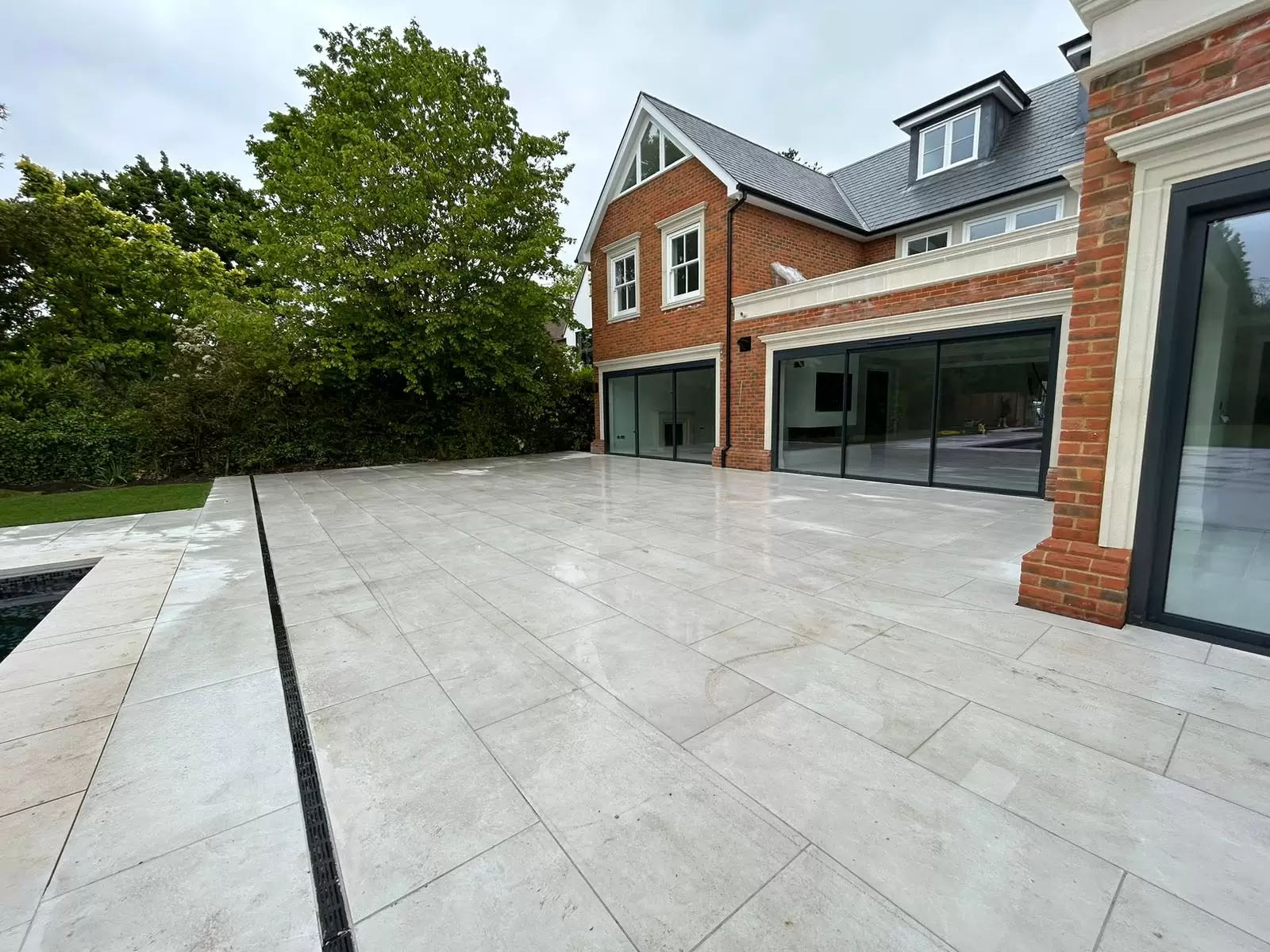
Here’s the bit most resin firms skip. Resin bound is permeable, but water only goes as far as the layer below. Laid onto a solid concrete base, the rain passes through the resin and then has to run somewhere. So on every resin driveway we plan the falls the same way we would for tarmac: away from the house, towards a border, gully, soakaway or ACO channel drain on your own land. We’ll explain which will suit your drive needs at the survey.
If you’re in a conservation area or the house is listed, check with Chelmsford City Council planning first. And if you’re widening the drive onto the road, you’ll need a dropped kerb approved by the council before we start.
Want us to have a look? Call 01277 546016 for a free, no hassle survey, or see our other driveway work around Chelmsford.
Resin Driveways in Chelmsford: your questions
How much does a resin driveway usually cost?
Our resin bound driveways start from £50 per m². That’s indicative only: the final price depends on the area, access, ground preparation required and the material spec, and we give a fixed quote after a free, no obligation on site survey. Call 01277 546016.
Which is better, a resin or tarmac driveway?
It depends what you want from it. Tarmac is the more cost-effective choice, lasts 15 to 20 years and can be laid in a wider range of weather. Resin bound is smoother, more decorative, lets water through and has no loose stones, lasting 15 to 25 years on a good base, but it costs more and needs dry weather above about 5°C to lay. For a long working drive we’d usually say tarmac. For the front of the house where looks matter, resin bound.
What are the pitfalls of resin driveways?
Most come from poor installation: resin laid over a cracked base without an anti-crack membrane, or laid in cold or wet weather. Resin bonded will also lose some loose stone over time. Laid properly over a sound base with a membrane, a resin bound driveway is a low maintenance surface that needs a sweep and the odd jet wash.
Do I need planning permission for a resin driveway?
Usually not, because resin bound is permeable and permeable front gardens are normally permitted development. If it’s laid onto a solid base, the water still needs to drain to your own land rather than the road. Conservation areas and listed buildings can need permission whatever the surface, so check with Chelmsford City Council if that applies to you.
Can you lay a resin driveway in winter?
Sometimes. Resin needs dry conditions and temperatures above about 5°C, so in winter we watch the forecast and may need to move your date. We’ll always tell you if that’s likely before we book you in.