Playground surfacing in Chelmsford for schools, nurseries and parks
We lay playground surfacing in Chelmsford and across Essex for schools, nurseries, councils and community groups: wet pour rubber and EPDM safety surfacing under play equipment, tarmac for hard play areas and paths, and resin bound where you want a smooth finish that drains. We’re a family run business with over 50 years in surfacing, based in Blackmore near Chelmsford, and we’re main contractors for local authorities, so school and public sites are normal ground for us.
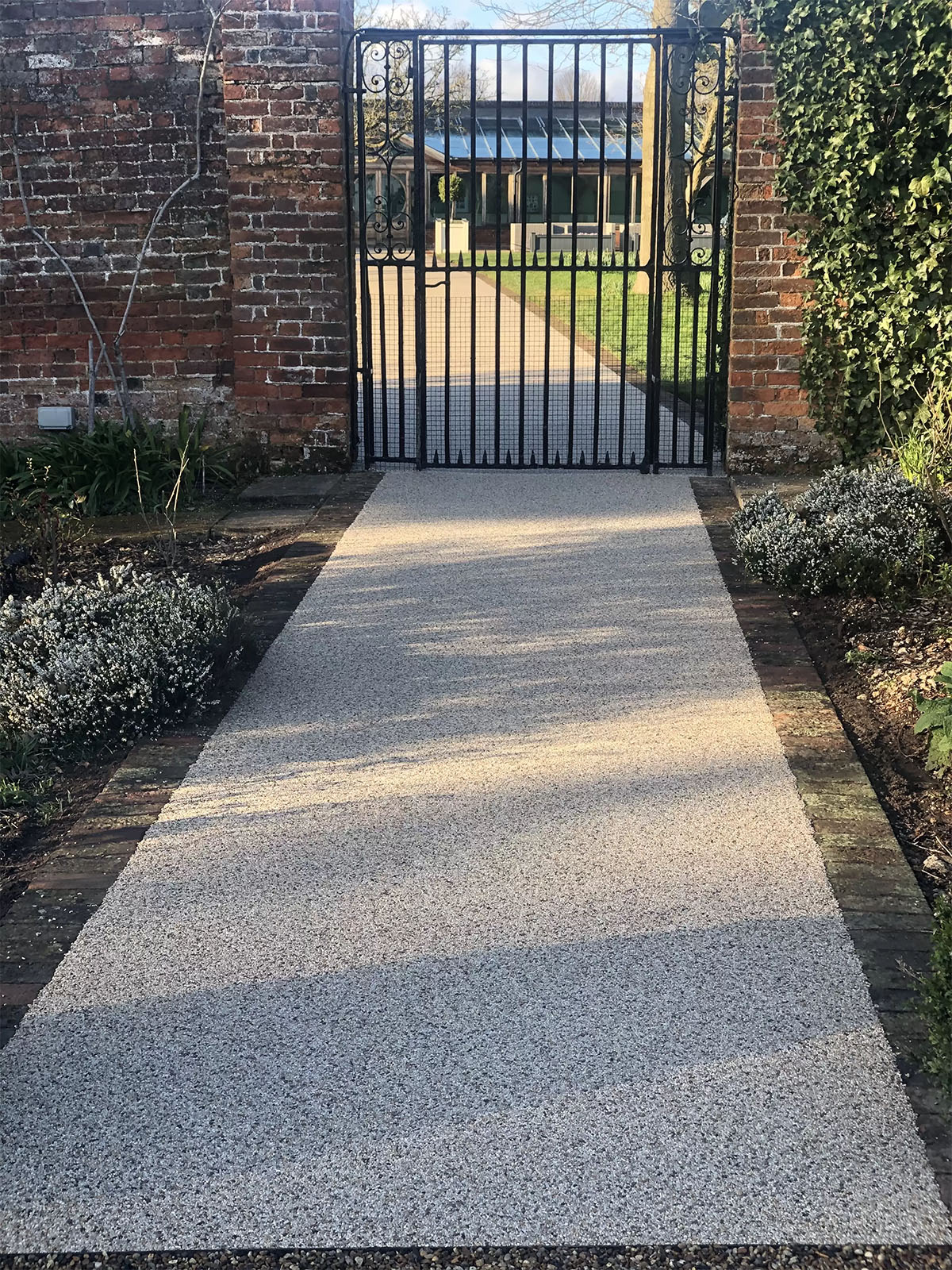
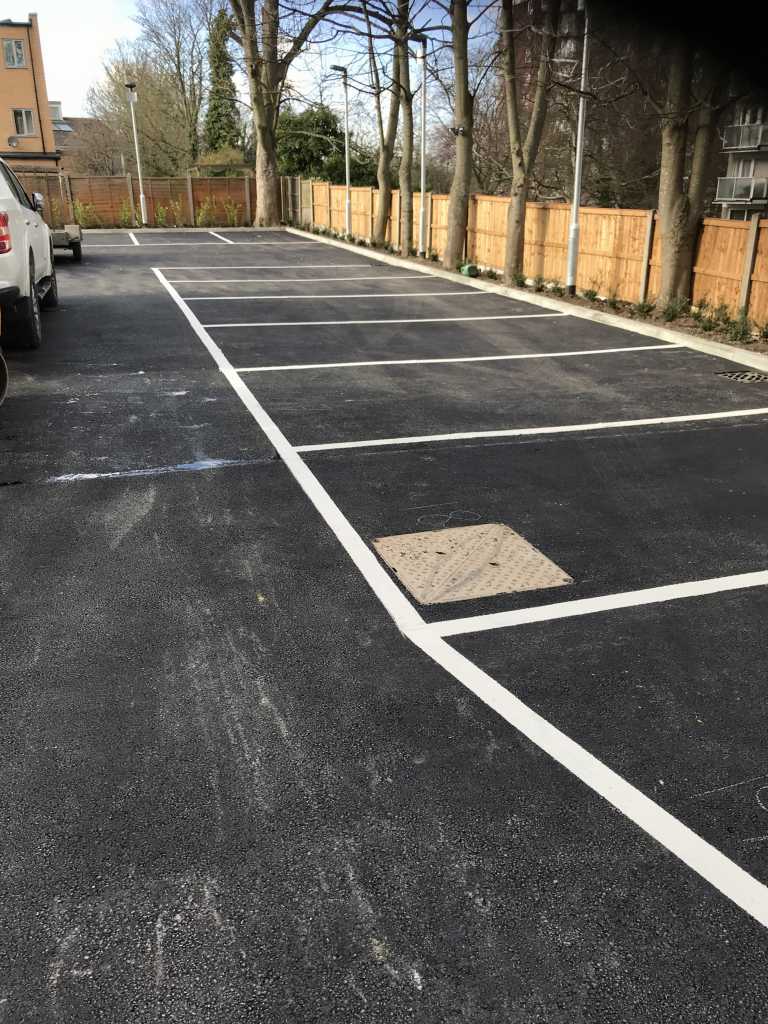
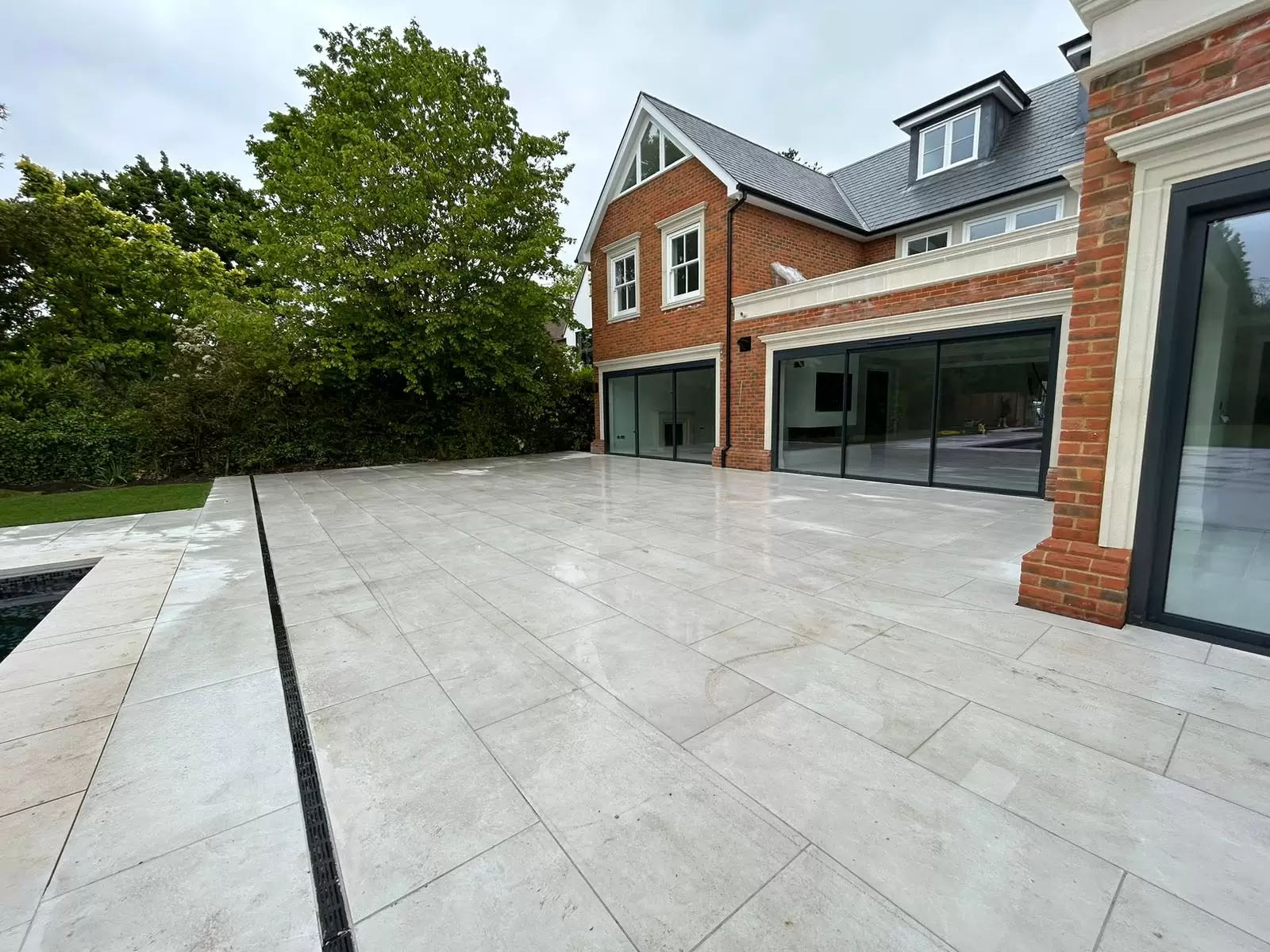
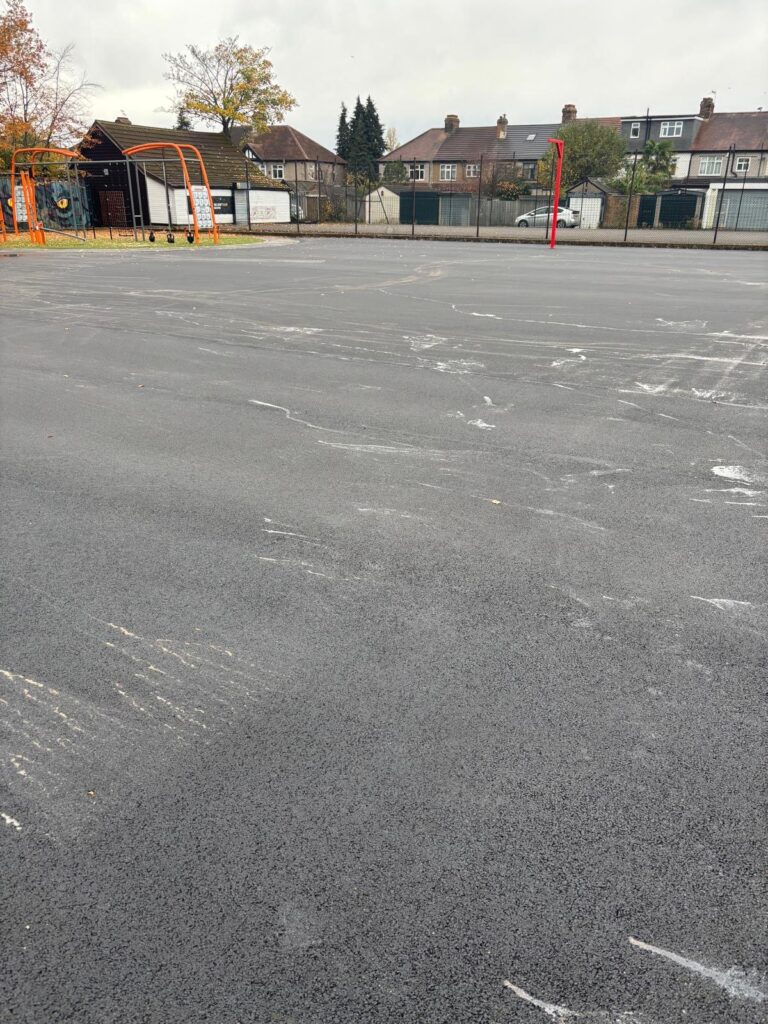
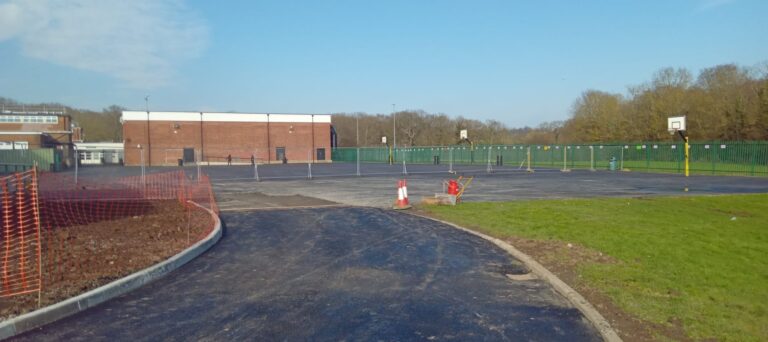
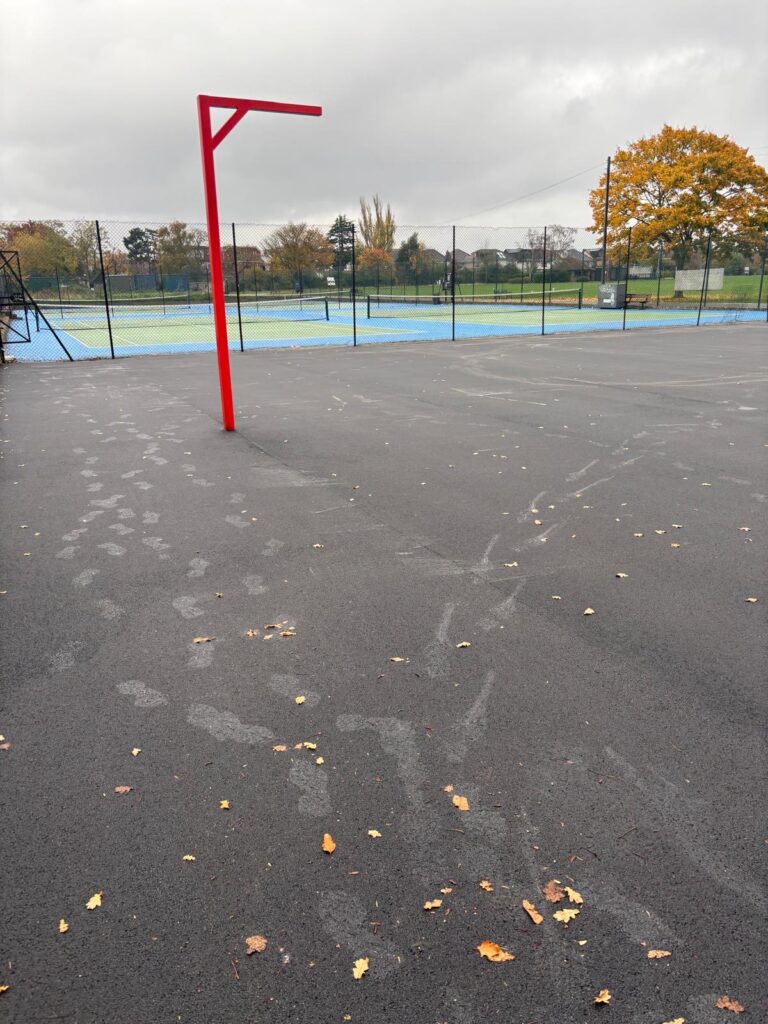
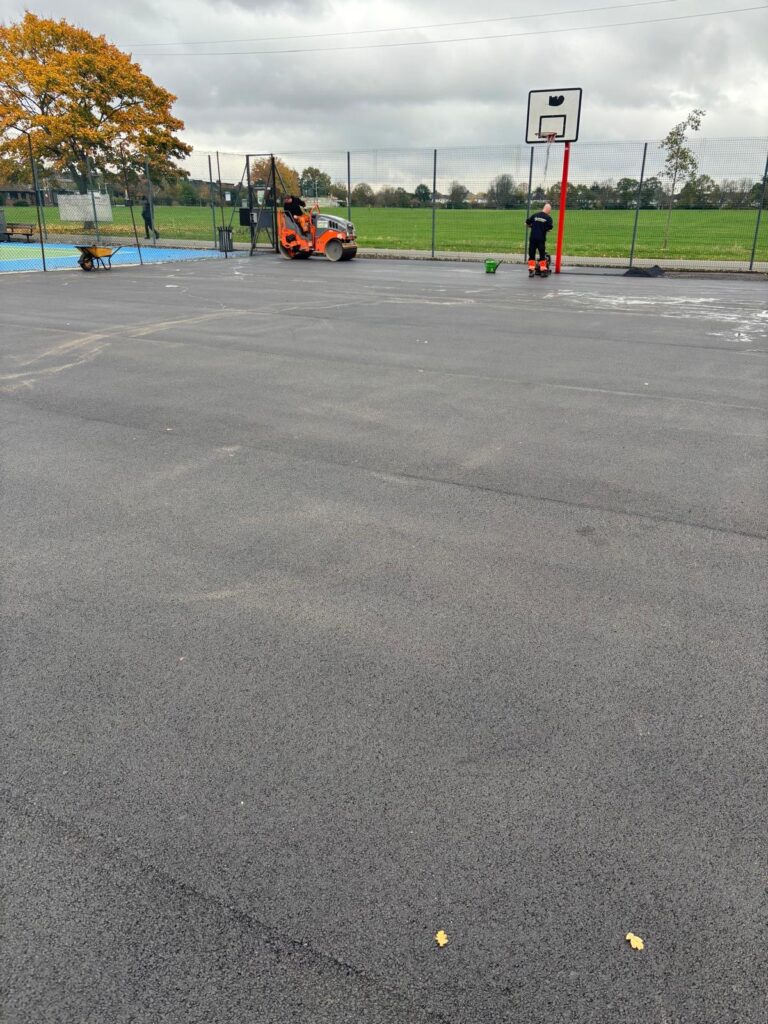
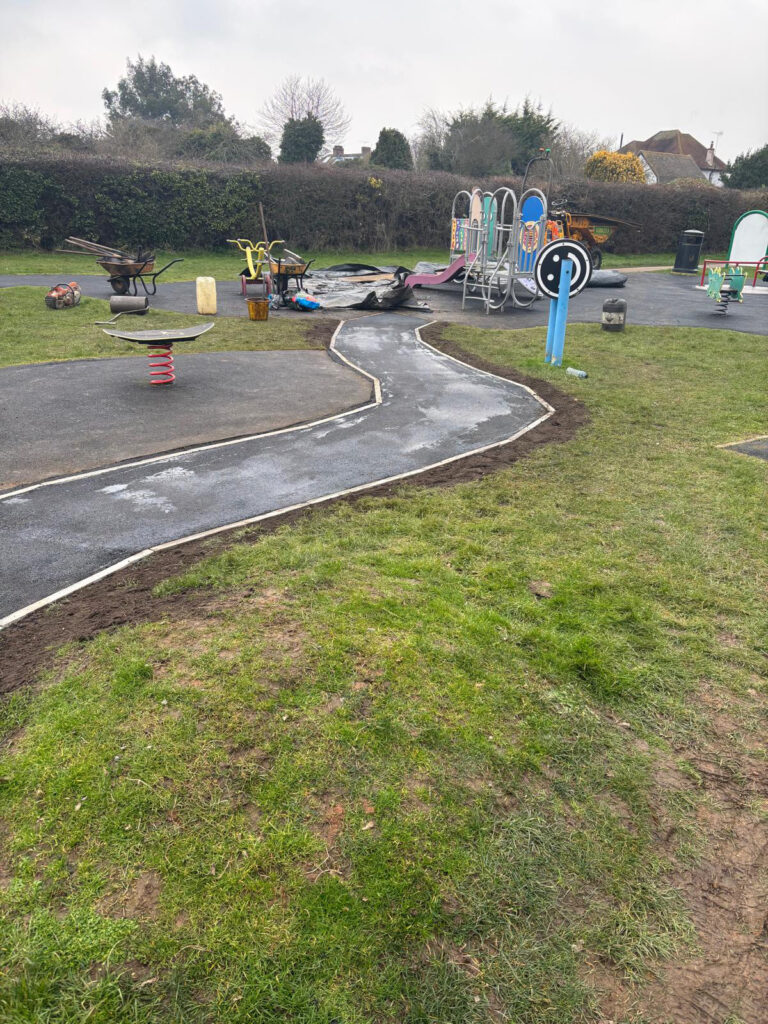
Our playground work includes resurfacing for local schools, a play area for a local park, surfacing for a community playground, and the footpaths and edgings that run through them. Some of those jobs are in the photos on this page.
On this page
Which playground surface goes where
Wet pour rubber and EPDM
Wet pour is the smooth, one piece rubber surface you see under swings and climbing frames. It’s mixed on site and trowelled into place by hand: a rubber crumb base layer with a coloured EPDM rubber layer on top, with no joins for small feet to catch on. It’s the one to use anywhere a child can fall from height.
Tarmac
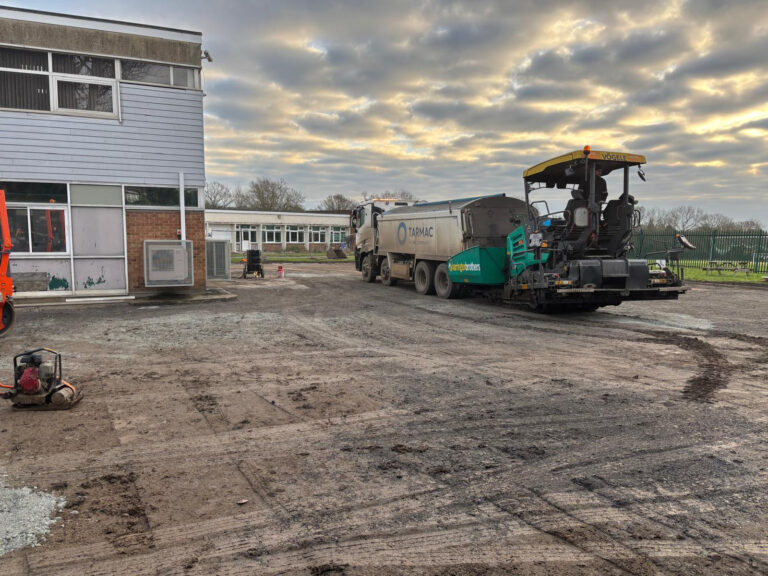
For playgrounds, games areas and the paths between them, hot laid tarmac is hard wearing and cost-effective. We use 6mm DBM for footpaths, and on larger playgrounds the tarmac goes down by machine for an even finish. Tarmac is not a safety surface, though, and it shouldn’t go under anything a child can fall from.
Resin bound
Resin bound (stones mixed through clear resin and trowelled smooth) suits paths, seating areas and quieter corners. It’s permeable, so rain drains through instead of puddling. Like tarmac, it doesn’t cushion a fall.
Most playgrounds end up as a mix of all three, and the survey is where we work out what goes where. If you’re planning a new play space from scratch, Fields in Trust publishes useful guidance on play space provision.
Fall heights, EN 1177 and how deep the rubber needs to be
Most playground surfacing pages skip this, and it’s the part that matters most. Safety surfacing is judged on how well it cushions a fall. The standard EN 1177 sets out how that’s tested and gives a critical fall height: the highest fall the surface is rated to protect against.
Thicker wet pour is rated for a higher fall. So the equipment sets the depth, not the salesman. A low springer needs far less than a tall climbing frame. We’ll ask for the free fall height of each piece of equipment (the manufacturer’s information or your last inspection report will have it) and lay the depth to match. Anyone quoting one thickness across a whole playground without asking about the equipment hasn’t done the sums.
The Association of Play Industries has plain guidance on safety surfacing and the standards behind it, if you’d like to read up before we meet.
What goes underneath your playground surfacing
Everyone looks at the rubber, but the base decides how long your playground surfacing lasts. Wet pour laid over soft, badly compacted ground will sink and split, and the first place it goes is where children land most: under the swings and at the bottom of the slide.
Starting from bare ground, we dig out and lay a compacted MOT Type 1 sub-base (crushed stone, rolled solid) with a firm base over it, then the wet pour on top. Where there’s already sound tarmac, we can often lay straight over it and save the digging. Edges get proper edgings so the surface can’t curl up at the sides, which would be a trip hazard of its own.
Drainage matters too. Wet pour is porous, but once water is through it, it needs somewhere to go. If the ground underneath can’t take it, the play area turns into a paddling pool. We look at falls and drainage on the survey, and if a soakaway or channel drain is needed, we put it in ourselves through our concrete and drainage side.
Working on school and public sites
For a school or public play area, the paperwork matters as much as the surfacing. We’re Constructionline and SafeContractor approved, CHAS accredited, and we carry ten million pounds of public liability insurance, which covers most of what a school business manager or council procurement team will ask for. We’re main contractors for local authorities including Hertsmere, Barnet, Tower Hamlets and Brentwood councils.
On timing, our strong preference is to work when the playground is empty: school holidays, or with the work area fenced off from the rest of the site. We agree the programme with you before we start, including where deliveries come in and where the fencing goes. Children and plant don’t mix, and we don’t try to make them.
Repairing or replacing an old playground surface
Not all tired playground surfacing needs ripping out. Wet pour that’s worn thin in a few spots, or lifting at an edge, can sometimes be patched. Cracked or potholed tarmac play areas can be repaired with cut out patches and bitumen overbanding on the joints, the same way we repair roads.
Where the rubber has gone hard, shrunk away from the edges or worn through to the base across large areas, patching is wasted money, and the surface may not cushion falls the way it should any more. At that point we’d recommend replacing it. We’ll tell you which you’re looking at on the survey, and show you why.
Faded markings on a tarmac playground can be put back in thermoplastic once any repairs are done. See our line marking in Chelmsford page for how that works.
How a playground surfacing job runs
It starts with the free survey. We measure up, look at the ground and the existing surface, check where the water goes and take down the fall height of every piece of equipment.
You get a fixed quote in writing, with the depth of each area of playground surfacing shown so you can see what you’re paying for.
On the first day on site, the fencing goes up and the work area is sealed off. Then we dig out where needed, using plant, which is the noisy part. The sub-base goes in and is compacted, the edgings are set, and any drainage goes in at the same stage.
Next comes the base layer. On larger areas the tarmac goes down by machine; on smaller areas and around equipment it’s laid by hand. The wet pour is mixed on site and trowelled in by hand, rubber crumb first and the coloured EPDM layer on top, worked carefully around the posts of the equipment so there are no gaps.
Wet pour needs time to cure before children are back on it. We’ll tell you when the area can be used, and we won’t take the fencing down until it’s ready.
What to have ready for the survey
- Equipment details. The manufacturer’s information or your latest inspection report, so we have the free fall height of each piece.
- Any changes planned. If equipment is coming out, moving or being added, tell us now. It changes the depths and the layout.
- Your dates. Term dates, holiday clubs and anything else booked on the site, so we can plan the programme around them.
- Access. Where a lorry and a small digger can get in, and any gates, steps or narrow paths along the way.
- Colours or markings. If you’d like more than one colour in the EPDM layer, or games marked on a tarmac area, mention it early so it’s in the quote.
None of it is essential before we visit, but the more we know, the more accurate the playground surfacing quote.
Playground surfacing costs
Wet pour rubber crumb surfacing starts from £60 per m². Prices start from that figure and are indicative only: the final price depends on the area, access, ground preparation required and material specification, including the depth your equipment’s fall heights call for. We give a fixed quote after a free, no obligation survey on site.
What usually pushes the price up is extra depth for taller equipment, a base that has to be built from scratch, drainage work and the number of colours. Tarmac and resin bound areas are priced at the survey. Call us on 01277 546016 or request a call back, and there’s more about our wider playground surfacing work on the main service page.
Playground Surfacing in Chelmsford: your questions
How much does playground surfacing cost per m²?
Wet pour rubber crumb surfacing starts from £60 per m². That’s an indicative starting price: the final figure depends on the area, access, ground preparation and the depth your equipment needs. We give a fixed quote after a free, no obligation survey. Call 01277 546016.
What is the safest surface for a playground?
Under and around play equipment, an impact absorbing surface such as wet pour rubber, laid to a depth that matches the equipment’s critical fall height under EN 1177. Tarmac and resin bound are fine for paths and hard play areas, but neither cushions a fall.
How thick does wet pour need to be?
It depends on the fall height of the equipment above it. Taller equipment needs a thicker layer to be rated for the higher fall. We work from the free fall height of each piece of equipment rather than laying one thickness everywhere.
Is wet pour rubber surfacing permeable?
Yes, wet pour is porous, so rain passes through it. The base underneath still has to drain, though, or water just collects below the rubber. We check the falls and drainage on the survey.
Can you lay wet pour over existing tarmac?
Often, yes, if the tarmac is sound and drains properly. It can save digging out. If the tarmac is cracked, sinking or holding water, it needs putting right first.
Can you do the work in the school holidays?
That’s what we’d recommend, so the playground is empty while we work. Talk to us early so we can plan it in, and we’ll agree the programme with you before we start.