Tarmac driveways in Chelmsford: what we actually lay
Tarmac driveways are still the most cost-effective way to get a hard, low maintenance drive on most Chelmsford homes, and we think they’re the most underrated surface going. Done properly, you’ll get 15 to 20 years out of one. Done badly, it starts breaking up in two or three.
On driveways we lay a 6mm SMA wearing course. SMA (stone mastic) is a dense, gap graded mix that wears hard and leaves a tight, fine finish. It goes over a base course on a compacted MOT Type 1 sub-base. Every joint, where new tarmac meets old, gets bitumen overbanding (a bitumen strip that seals the joint against water).
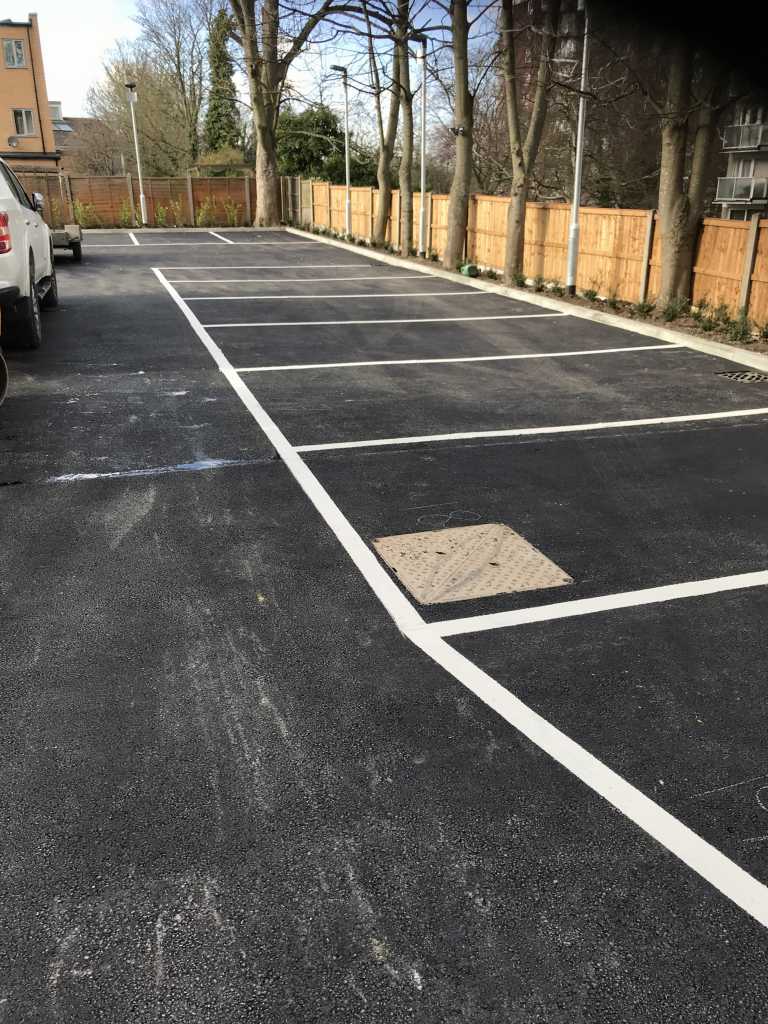
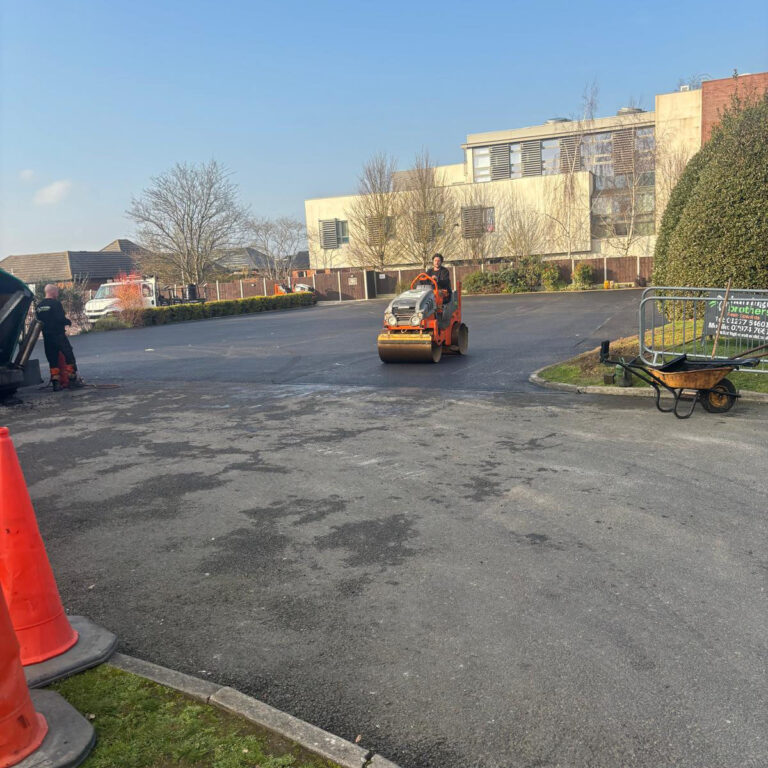
That isn’t a special driveway spec dreamt up for the website. It’s how we work on council and commercial jobs too. The 840 m² car park we resurfaced in Ongar went down in 55/10 HRA, a heavier mix for daily traffic, and got overbanding on every joint as well.
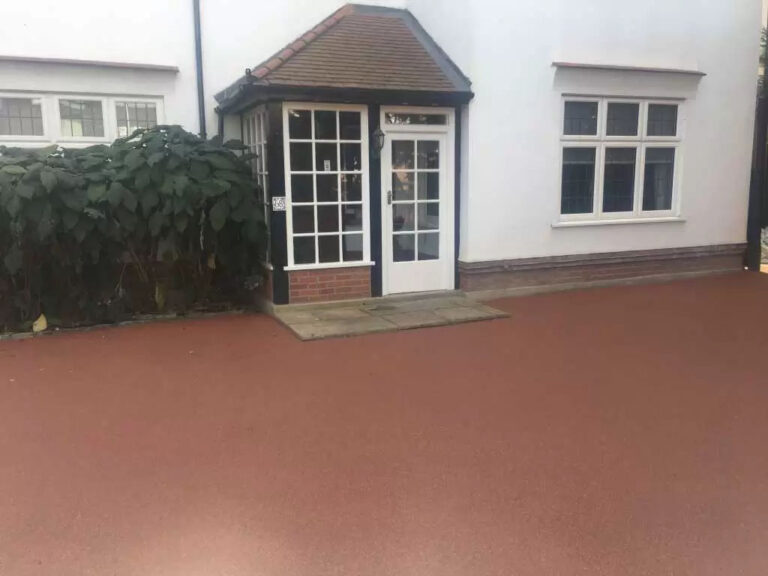
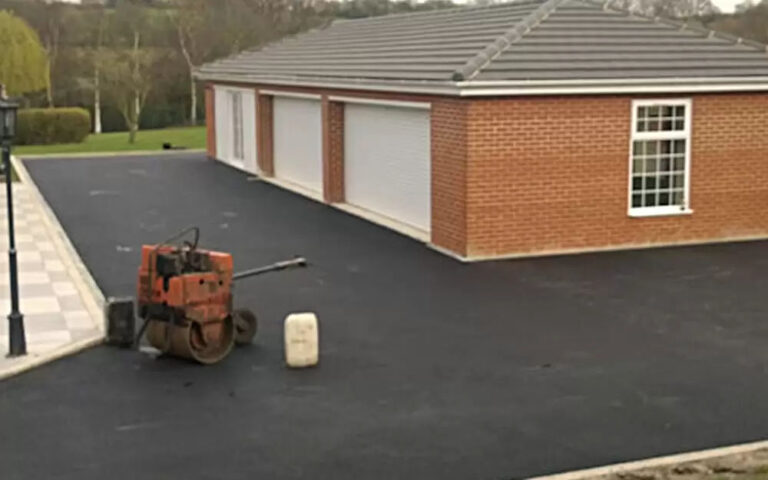
Some of our tarmac is already on Chelmsford drives, including a red tarmac driveway. Black is standard. Red is there if you want something warmer that still behaves like tarmac.
We’ve also done tarmac road repairs in Chelmsford itself, with full traffic management in place. We mention it because the people who sign off council road work don’t care how a job looks in a photo. They care whether the base was right and the joints were sealed, and it’s the same crew habits that go onto your drive. We’re main contractors for local authorities including Brentwood, Hertsmere, Barnet and Tower Hamlets.
On this page
Why tarmac driveways fail, and what a cheap quote leaves out
Tarmac is forgiving on top. Underneath, it isn’t. A poorly compacted sub-base will fail in 2 to 3 years whatever you lay over it, and that’s where cheap quotes find their savings.
What to look out for:
- Too shallow a dig. A lot of Essex sits on clay, which holds water and moves with the seasons. Skimp on the sub-base and the ground works its way up into the drive. We dig to suit what we find, not to hit a price.
- No edging. Tarmac needs something holding its edge. Without a kerb or edging, the sides crumble first.
- Unsealed joints. Water gets in where new meets old, freezes, and opens it up. Overbanding stops that, which is why it goes on every job we do.
- No fall. Tarmac doesn’t let water through, so it has to run somewhere sensible. A puddle in the middle of a new drive means nobody set a fall.
- The doorstep offer. Leftover tarmac from a job round the corner, raked onto unprepared ground. If someone knocks with that, it’s a polite no.
How much is a tarmac driveway in Chelmsford?
Our tarmac driveways start from £25 per m². It’s an indicative figure: the final price depends on the area, access, the ground preparation needed and the material spec. We give you a fixed quote in writing after a free, no obligation survey.
What moves the price most is everything under the 6mm SMA. Breaking out an old concrete drive and carting it away costs more than laying onto a base that’s already sound. So does new kerbing, a drainage channel, or tricky access where everything goes in by barrow.
On the cheapest driveway finish: shingle and tar and chip both start lower, from £10 per m², but neither gives you a smooth, sealed surface. For that, tarmac is the cheapest we lay.
Resin bound starts from £50 per m² and block paving from £60 per m², on the same terms. If you want to spread the payments, see our finance options.
One thing we’d say about price: compare quotes line by line. If one tarmac driveway quote is a lot cheaper than the others, find out which of the layers above it’s left off.
From the first dig to driving on it
Most tarmac driveways take 2 to 5 days, and we agree the dates with you before we start.
The early part is digging and building. The old surface comes up, the spoil goes away, the edging goes in, and the MOT Type 1 is laid and compacted with a roller. It’s noisy and there’ll be a lorry or two, so a word with the neighbours helps. Get the cars out onto the road the night before, and if the bins live on the drive, find them a new home for the week or we can move them for you once we get there.
Laying day is when the hot tarmac turns up on the wagon. We lay the base course, then the 6mm SMA wearing course by hand with rakes, and roll it while it’s hot. Then the overbanding goes on the joints. Machine laying is for car parks, playgrounds and big areas. A domestic driveway is hand work, but if the area is large enough we can machine lay too.
You can walk on it after a few hours and drive on it after 24 to 48 hours. For the first 2 to 4 weeks it’s still soft enough to mark, so keep heavy point loads off it: no jack stands, motorbike stands or skips. After that, a sweep once a year keeps it right, and you might want a sealant on it after 7 to 10 years.
One thing that catches people out in the first summer is turning the steering wheel while the car’s standing still. On fresh tarmac on a hot day, that twists the surface and leaves a scuff. Roll the car forward a touch as you turn and it won’t happen. For the first few weeks, shift where you park a little each day so the tyres don’t press a dip into one spot.
Oil and diesel drips soften tarmac over time too, so if the car leaks, a drip tray is cheaper than a patch. None of it is fussy for long: once the surface has hardened, it’ll take whatever you park on it.
Are tarmac driveways good? When we’d say no
For most homes, yes. A tarmac driveway wears hard and needs very little looking after, and a fresh 6mm SMA finish looks nice and tidy against brick. It also has a wider weather window than resin, which helps when you want the job done before winter.
But there are times we’d point you elsewhere:
- You need water to soak away and there’s nowhere on your land for it to go. A permeable build makes more sense. Have a look at resin bound driveways in Chelmsford.
- It’s the front of a period house and the look matters more than the cost. Block paving or resin bound with a granite sett border will sit better.
- The drive is likely to be dug up for pipes or cables soon. Block paving lifts and goes back. Tarmac gets patched.
Not every tired tarmac drive needs digging out, either. If the base is sound and it’s just the surface that’s worn, driveway resurfacing may be enough. If it’s sunk, rutted or breaking up in patches, the base has gone, and a new top will only hide it for a while. We’ll tell you which at the survey.
Planning, falls and drainage on a tarmac driveway
Tarmac is impermeable unless opengraded, and that matters because of the 5 m² rule. Lay more than 5 m² of solid surface across a front garden, let it drain onto the road, and you need planning permission. Drain it to a lawn, border or soakaway on your own land and you usually don’t. The Planning Portal guide to paving front gardens has further details if you so need.
So we set falls on every tarmac driveway on purpose, in the sub-base, not fudged in the top layer. Water runs away from the house and garage towards a border, gully or ACO channel drain we’ve allowed for. That’s part of the quote from the start. Our concrete and drainage team put the channels in.
If you’re widening the drive onto the road, you’ll need a dropped kerb, which is a council application. The GOV.UK dropped kerb page gets you started and we can handle the drop kerb install too. If you’re in a conservation area, check with Chelmsford City Council before anything gets dug.
For a free, no obligation survey, call 01277 546016. You can see more finished jobs on our main tarmac driveways page.



Tarmac Driveways in Chelmsford: your questions
What is the cost of a tarmac driveway?
Our tarmac driveways start from £25 per m². That’s indicative only: the final price depends on the area, access, ground preparation required and the material spec, and we give a fixed quote after a free, no obligation on site survey. Call 01277 546016.
How long does a tarmac driveway last?
Properly laid, 15 to 20 years. The difference is the prep: a poorly compacted sub-base will fail in 2 to 3 years no matter how good the tarmac on top is. We use a 6mm SMA wearing course with bitumen overbanding on all joints.
When can I drive on a new tarmac driveway?
You can walk on it after a few hours and drive on it after 24 to 48 hours. Keep heavy point loads like jack stands and motorbike stands off it for 2 to 4 weeks while it hardens up.
What is the most budget friendly option for a driveway?
On price alone it’s shingle or tar and chip, both from £10 per m². For a smooth, sealed surface it’s tarmac, from £25 per m². All indicative and subject to a free survey. Just make sure the cheap quote you’re comparing includes a proper sub-base, edging and sealed joints, because those are what make it last.
Do I need planning permission for a tarmac driveway?
Only if you’re laying more than 5 m² across a front garden and it drains onto the road. If it falls towards a border, lawn or soakaway on your own land, it’s normally permitted development. Conservation areas and listed buildings can be different, so check with Chelmsford City Council.
Can you lay tarmac in winter?
Tarmac has a much wider weather window than resin, so yes, most of the year. We’ll still move a date if the weather would affect the finish, and we’ll tell you in good time.