Property maintenance in Chelmsford, from the ground up
Property maintenance means different things to different firms. Search for it in Chelmsford and most of what comes up is handyman work: door repairs, flat pack, a lick of paint between tenants. That’s useful, but it isn’t us.
Our property maintenance is for commercial sites, schools, councils and the people who run them. We take on programmed repair and maintenance contracts covering surfacing, line marking, drainage, fencing repair and general grounds, plus roof repairs and site hoarding. We’re a family run business with over 50 years in surfacing, based in Blackmore just outside Chelmsford, and the outside of a site is where we’re strongest.
If you look after a business park, a retail unit, a school or a block of flats with a car park, the usual headache is five contractors for five problems. We’d rather be the one number you ring.
On this page
What our property maintenance covers
Surfacing and potholes
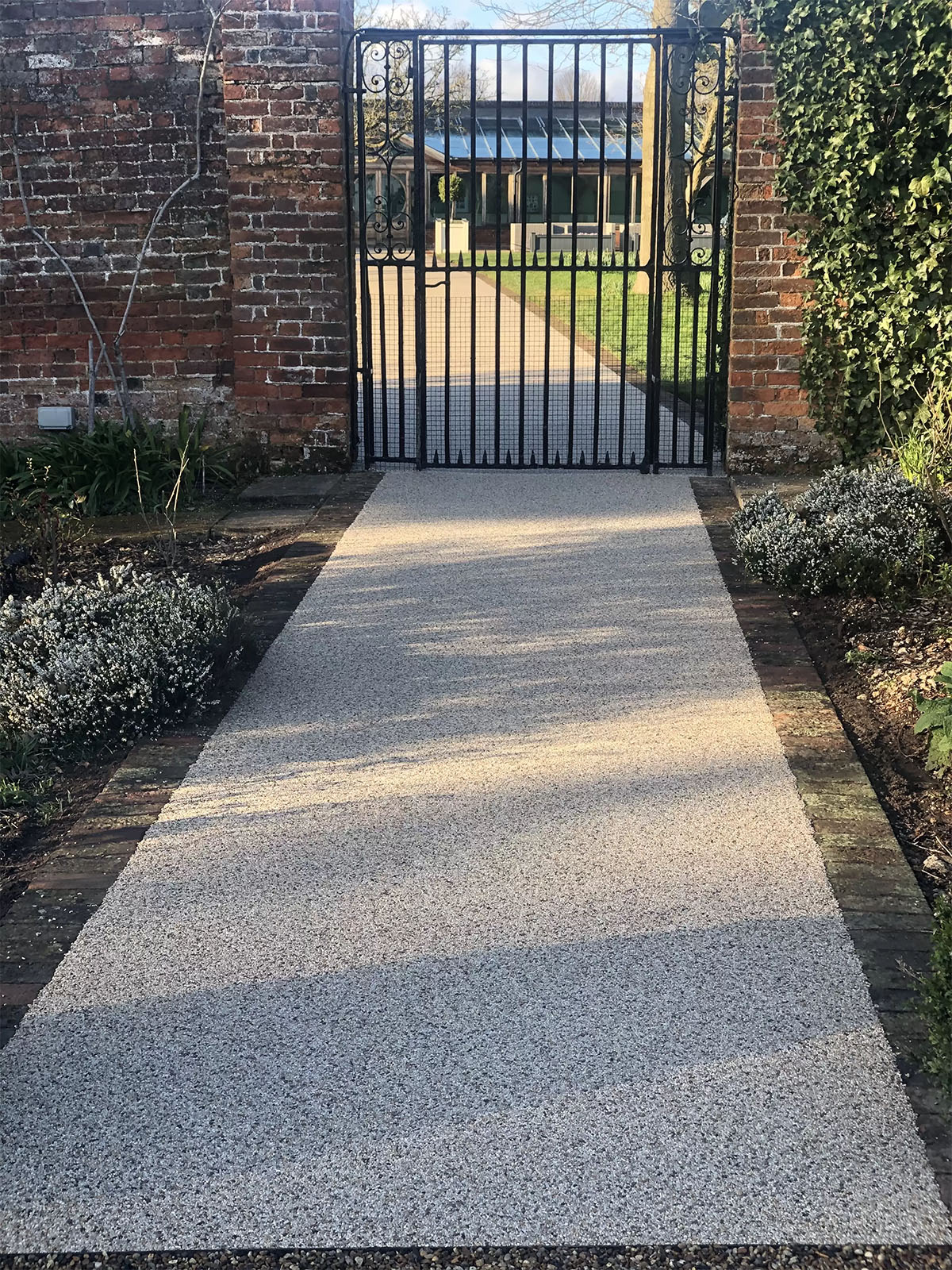
Car parks, access roads, service yards, footpaths and playgrounds. Potholes done properly: cut out, cleaned, tack coat applied, hot laid tarmac, rolled, and the joints sealed with bitumen overbanding. Not a shovel of cold lay that’s back out by spring. See our pothole repairs in Chelmsford and car park surfacing in Chelmsford.
Line marking
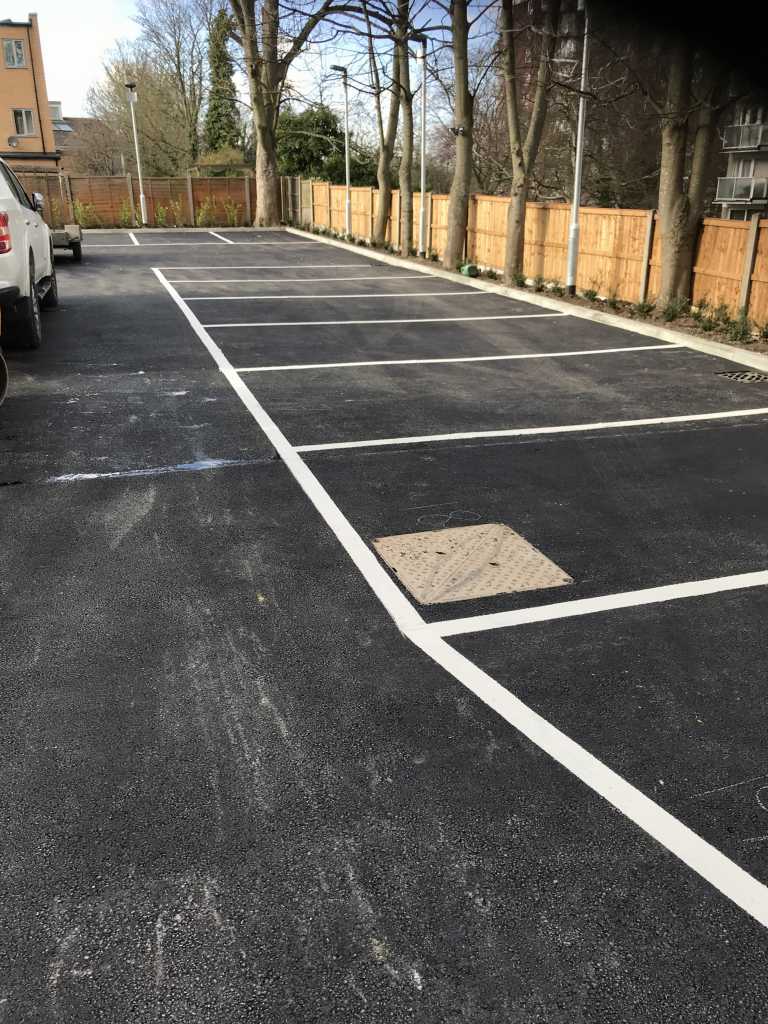
Hot applied thermoplastic for bays, arrows, hatching, loading bays and disabled spaces. It bonds with the tarmac and doesn’t fade the way paint does. More on line marking in Chelmsford.
Drainage and concrete
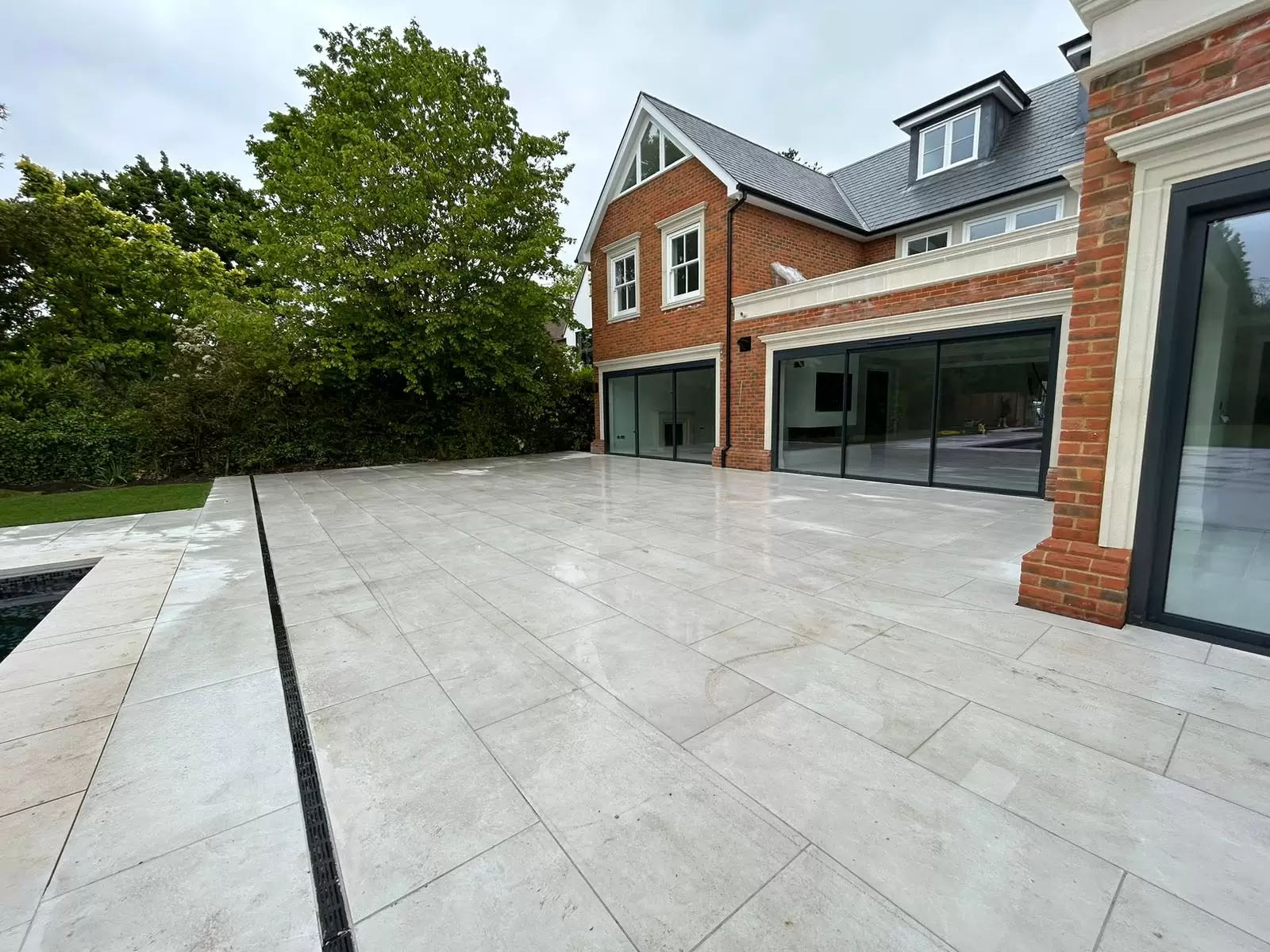
ACO channel drains, soakaways and concrete repairs, for when standing water is wrecking a surface or a slab has cracked. See our concrete services.
Fencing, hoarding and grounds
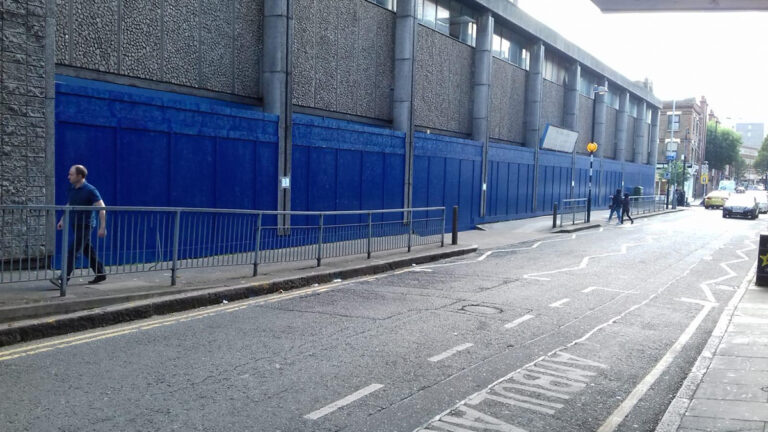
Fencing repairs, site hoarding and general grounds upkeep. At the Royal London Hospital we put up a wrap around site hoarding, painted, with four gates.
Roof repairs
Roof repairs sit under our property maintenance work too, including jobs we’ve done in London.
Planned, reactive and the jobs in between
There are three main ways to run property maintenance on a site, and most clients end up with a mix of all three.
- Planned (preventive). Work done on a schedule before things fail. Relining bays before they disappear, sealing cracks before winter gets into them, clearing channel drains before the leaves block them.
- Reactive (corrective). Fixing what’s broken. A pothole by the entrance, a fence panel down after a storm, a blocked drain flooding the yard.
- Condition based. Inspecting and acting on what you find. We walk the site with you, note what’s going, and give you a priority list so the budget goes where it’s needed first.
Our honest view: on surfacing, planned work nearly always costs less than reactive. A crack sealed now is cheaper than a pothole next year, and a pothole fixed now is cheaper than dealing with someone who’s tripped in it.
A simple year round property maintenance calendar
Most outside property maintenance follows the seasons. If you look after a site and want a rough plan for the year, this is the one we’d use on our own yard:
- Autumn. Clear leaves out of channel drains, gullies and roof gutters before they block. Seal open cracks in the car park before the frost gets into them.
- Winter. Walk the site after a hard frost and mark any new potholes or lifted slabs. Note where water sits after heavy rain, because that’s where the next failure starts.
- Spring. The time to fix what winter opened up: patch repairs, kerbs reset, fence panels replaced after the storms.
- Summer. Warm, dry weather suits thermoplastic lining and bigger surfacing jobs, and schools usually want the heavy work done in the holidays.
You don’t need a contract with us to follow it. If you’d rather hand it over, we can walk the site at those points in the year and send you a short priority list each time, so the property maintenance budget goes on what’s actually failing.
What usually needs attention, site by site
Business parks and retail units
The entrance and the turning area for delivery lorries go first, because that’s where the heaviest wheels scrub the surface every day. Bay lines fade, kerbs get clipped, and channel drains silt up until the yard floods in the first heavy downpour. None of it is dramatic on its own. Left for a couple of years, it all becomes one big resurfacing bill.
Schools
Playgrounds wear thin, footpath slabs lift at the edges, and game markings fade until nobody can see the basketball court. We look after playground surfacing as well as the paths and car park, and we agree the timing with you so the work suits the school day.
Flats and managed blocks
Usually the residents’ car park, the footpaths to the doors, the bin store slab and the fence lines. Trip hazards on shared footpaths are the ones to sort first, because they’re the ones that turn into complaints.
Car parks and surfacing: the work we’re known for
Surfacing is the core of the business, and it’s where a maintenance firm that can’t lay tarmac lets you down. We resurfaced an 840 m² car park in Ongar: sub-base assessed and prepared, hot laid base course, a 55/10 HRA wearing course, bitumen overbanding on all joints, and thermoplastic lining for the bays, hatching and arrows. In West Mersea we repaired a business’s car park in 55/10 HRA and relined their loading bay.
At the bigger end, we laid a 10,000 m² depot for Ashtead Plant Hire. Closer to you, we’ve carried out tarmac road repairs in Chelmsford with traffic management in place, the kind of planning that matters when your site can’t simply shut for the day.
Car parks and large areas are machine laid. Patches, corners and smaller areas are laid by hand. We’ll tell you which your job needs and why.
Working safely on a live site
Property maintenance usually happens while the site’s open, with staff parking, deliveries arriving and the public walking through. That’s where planning earns its keep. We agree the schedule with you beforehand, fence off the work area, and where it helps we can phase the job so part of the car park stays in use.
We hold Constructionline, SafeContractor and CHAS accreditation, we’re registered with CIRAS and RISQS, and our public liability insurance covers up to ten million pounds. Your facilities or procurement team will know what those mean. For the regulations behind construction work on any site, the HSE’s construction guidance is the place to start.
Some maintenance touches planning law too. Replacing a fence like for like is usually straightforward, but height limits apply, particularly next to a road. The Planning Portal’s guidance on fences, gates and garden walls sets them out.
Councils and commercial clients
We’re main contractors for local authorities, including Hertsmere Borough Council, the London Borough of Barnet, Tower Hamlets Council and Brentwood Borough Council.
Council work gets inspected, so the habits stick: the right mix for the job, every joint sealed, the site left tidy. Our commercial property maintenance clients get the same teams and the same standard.
Brentwood borders Chelmsford, and our yard in Blackmore is close to where the two meet, so a site in Chelmsford, Danbury or Ingatestone is a short run for us. That matters when a drain’s flooding the car park on a Monday morning and you’d rather not wait for a contractor coming from the other side of the county.
There’s more on that side of the business on our local authority contracting page, and on our main property and site maintenance page.
Getting your site looked at
Ring 01277 546016 or contact us and we’ll come and walk the site. The survey is free, with no hassle and no obligation, and you get a fixed quote in writing. For a very small pothole repair, photos are often enough for us to give you an idea before anyone visits.
It helps if you can send a site plan, a few photos of the worst areas and a list of anything that’s already been reported. Tell us your opening hours and any times we can’t block the entrance. With that, the survey is quicker and the quote comes back tighter.
We don’t publish prices for property maintenance work, because no two sites are the same. What we will always do is explain what’s driving the number, and what can wait until next year if the budget’s tight.

Property Maintenance in Chelmsford: your questions
What is classed as property maintenance?
Anything that keeps a building and its grounds safe and in good working order. For us that’s the outside of a site: surfacing, potholes, line marking, drainage, fencing, hoarding, grounds and roof repairs. Internal handyman jobs like doors and decorating are a different trade.
What does someone in property maintenance do?
They inspect, repair and look after a property so small problems don’t become expensive ones. On our contracts that means planned work on a schedule, reactive repairs when something breaks, and condition checks so the client knows what’s coming before it arrives.
What are the three main types of maintenance?
Planned (preventive), reactive (corrective) and condition based. Planned work happens on a schedule before things fail, reactive work fixes what’s already broken, and condition based work means inspecting the site and acting on what you find. Most sites need a mix.
Does my neighbour have to give me access to maintain my property?
Not automatically. Most access is agreed between neighbours, and it’s worth asking in writing early. If someone refuses access for necessary repairs, the Access to Neighbouring Land Act 1992 lets you apply to the court for an access order. Take legal advice before going down that road; we’re surfacing contractors, not solicitors.
Do you take on single repairs as well as contracts?
Yes. A single pothole, a damaged fence line or a blocked channel drain is a fine place to start, and we quote it the same way: a free survey and a fixed price in writing. Very small pothole repairs can often be looked at from photos first.