Block paving in Chelmsford: why the prep is everything
Block paving is the surface where you can spot a bad job from the pavement. A wavy drive, blocks that rock underfoot, a dip where the car always sits: that’s almost never the blocks. It’s the screed or the sub-base, and it usually shows within a couple of years.
The blocks themselves are tough. They’re concrete or clay, laid in a pattern on a sand screed over a compacted sub-base, with edge restraints holding the whole lot in. Because every block is separate, you can lift a section to get at a drain or a cable and put it back afterwards. Done right, block paving lasts 25 years and more.
That’s why we’ll always talk to you about what’s going underneath before we talk about colours. The pattern is the fun part. The base is the part you’re paying for.
We don’t only lay block paving on driveways. As main contractors for local authorities, we lift and relay block paved footpaths as well as concrete slab footpaths for councils, screed and all, where the public walk over every joint and a rocking block gets reported. Our yard is in Blackmore, a few miles from Chelmsford, and the block paving we lay on your drive gets the same care as a public footpath. If anything, it’s easier: you’re the only person we have to keep happy.
On this page
How we lay a block paved driveway
- Free survey. We check levels, where water goes now and what’s under the old drive, and talk through patterns and borders.
- Dig out. The old surface comes up and goes away. A lot of Essex is clay, so we dig to firm ground: a soft spot left now is a dip later.
- Sub-base. MOT Type 1 (crushed stone), laid and compacted. The falls are set here, not fudged in the sand.
- Kerbs and edge restraints. Set firm so the paving can’t creep outwards under the car.
- Screed. Sand screeded to an even bed. This is the step that makes or breaks the job.
- Blocks. Laid in your pattern, and cut by hand around edges, drains and manhole covers.
- Jointing and compaction. Kiln dried sand swept into the joints, then the whole drive compacted so the blocks bed down and lock together.
Most domestic driveways take 2 to 5 days, and block paving tends to sit at the longer end because every block goes down by hand. The upside comes at the end: once it’s compacted and jointed, you can drive on it straight away.
Block paving prices: from £60 per m²
Our block paving starts from £60 per m². That’s indicative only: the final price depends on the area, access, the ground preparation needed and the block and pattern you choose.
We give you a fixed quote in writing after a free, no obligation survey.
It’s dearer than tarmac (from £25 per m²) or resin bound (from £50 per m²), and the reason is time. Herringbone means more cuts than a straight stretcher bond. A contrasting border is another row set by hand. Curves mean cutting nearly every edge block. None of that is padding; it’s just what block work takes.
Where a cheap block paving quote usually saves money is the same place every time: less dig, a thinner sub-base, no proper edge restraint, and a screed that’s been raked rather than screeded level. You won’t see any of it on the day of completion. You’ll see it the first winter, when the dips start showing where the car parks.
If you’d like to spread the cost, our finance options page explains how. And if the budget points you towards a different surface, we’d rather tell you that at the survey than sell you block paving you’ll resent paying for.
Patterns, borders and which blocks to use
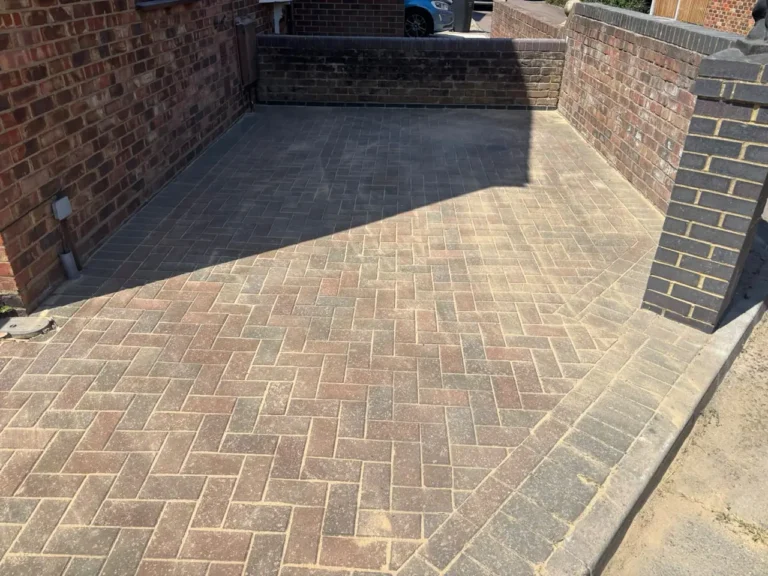
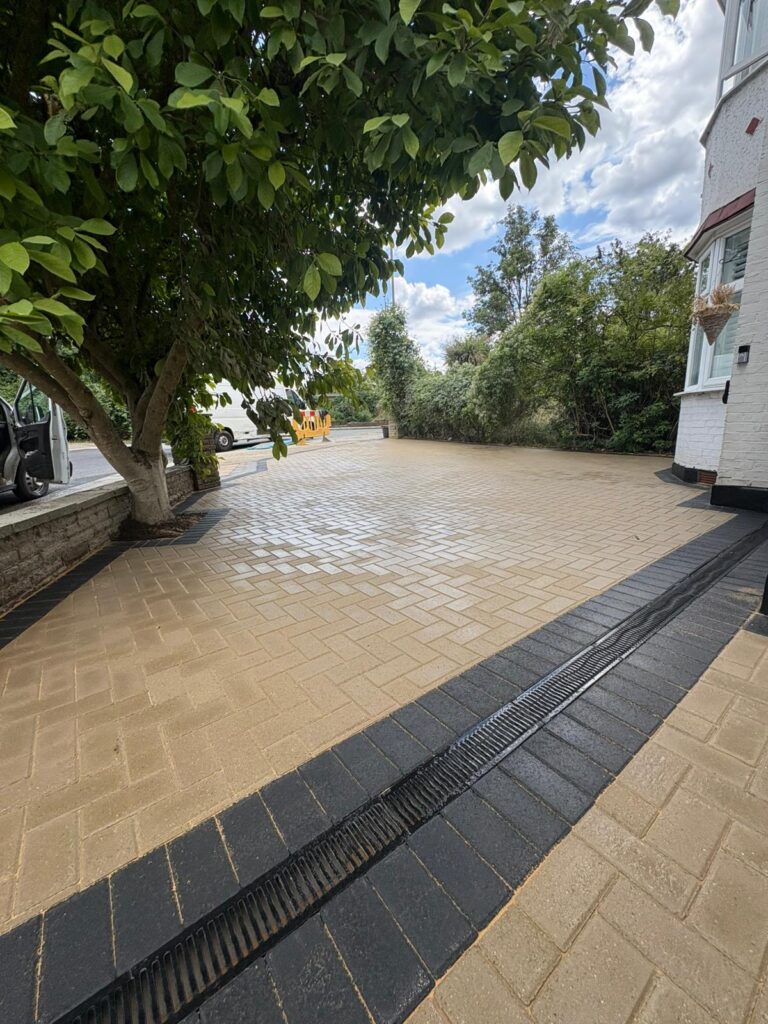
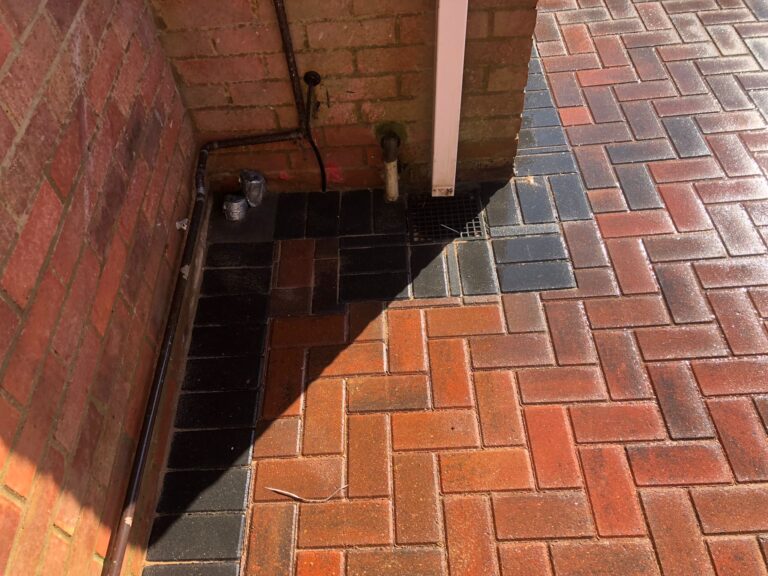
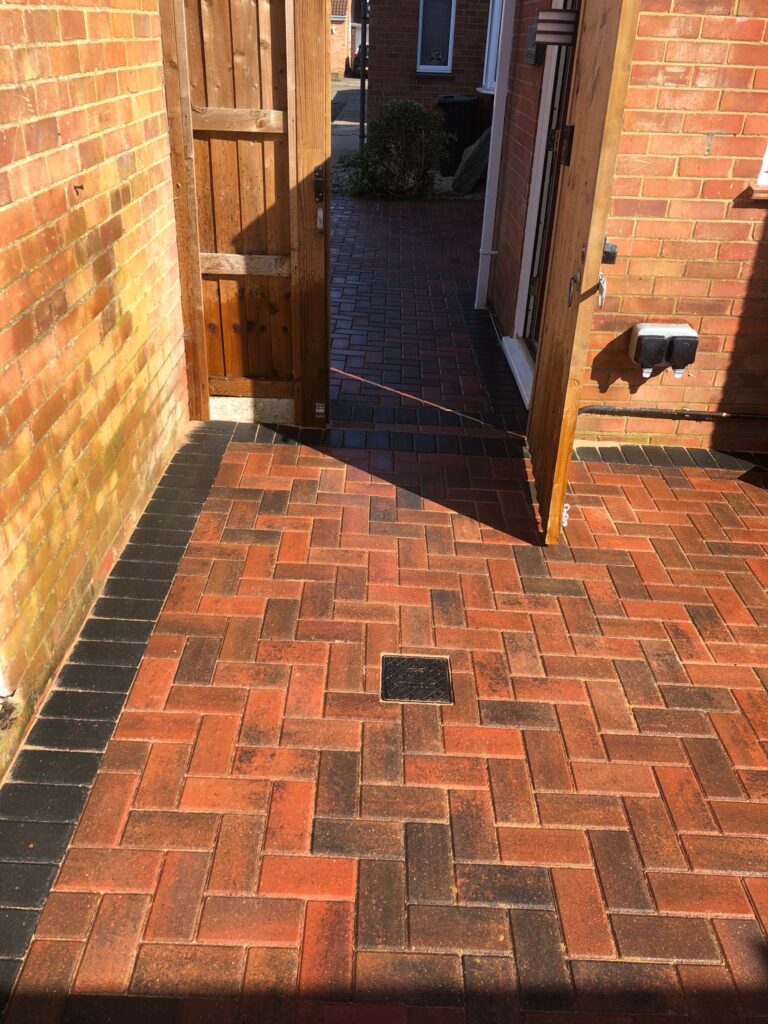
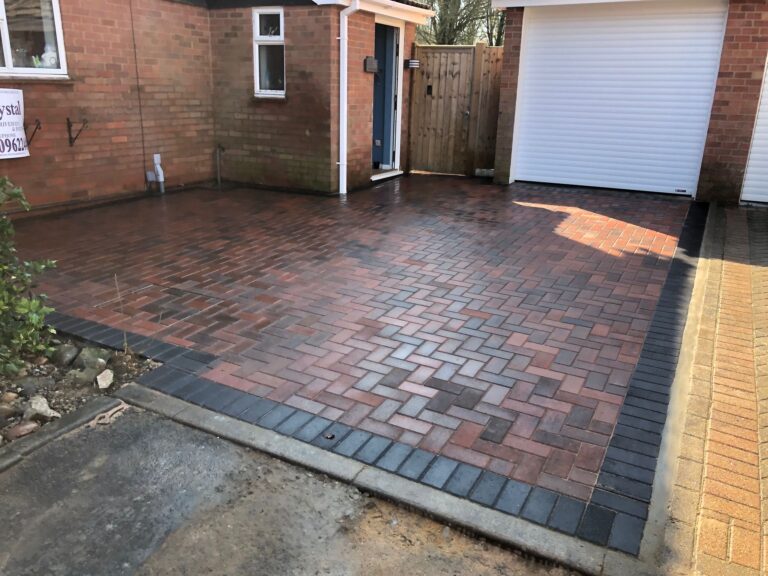
Herringbone is the pattern we’d suggest for a drive where cars turn, because the blocks lock against each other in two directions. Stretcher bond, laid in straight rows, is quicker to lay and suits paths and narrow runs. The herringbone drive between brick walls in our photos is a good example of how tidy it looks on a tight space.
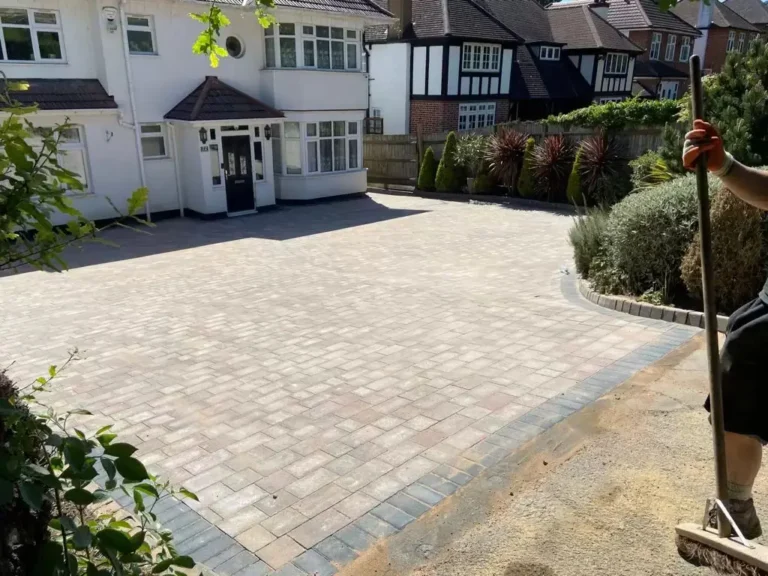
Borders do a lot of the work visually. One of the drives in our photos has a natural coloured inlay with a bold charcoal border, which keeps a big area of block from looking flat.
Tegular block (a block with a chamfered top edge) gives a softer, more traditional line, and a granite sett border suits older houses.
Are 50mm blocks OK for a driveway? Block thickness has to match what’s driving on it. Thinner blocks sold for patios are made for feet and garden furniture, not a car turning on them every day. We specify the block for the load at the survey and tell you why.
We also lay natural sandstone on a mortar bed over a concrete sub-base, if you want slabs rather than blocks. See our main block paving and sandstone driveways page for more of both.
Sunk or weedy block paving? Lift and relay before you rip it out
Not every tired block drive needs replacing. If the problem is the bed underneath, we can lift the blocks, take out the old screed, lay new screed and relay. We did exactly that for a client in Stanmore, London: existing blocks lifted, old screed removed, new screed down and new blocks laid for a fresh new look. Your old blocks can go back or new ones can go in, depending on their condition and what you want.
Weeds in the joints are usually a sign the sand has washed out. The fix is to re-sand the joints every few years and give it the occasional jet wash. After a jet wash, brush fresh kiln dried sand back into the joints once the drive is dry, because the water blasts the old sand out. It’s not glamorous, but it keeps the blocks locked.
A tip from the trade: ask us to leave you a few spare blocks from the job and keep them in the garage. If one gets cracked by a skip lorry or soaked in engine oil years from now, we can lift it out and drop a matching one in, and you won’t be hunting for a colour that’s since been discontinued which can happen on the rare occasion.
If one patch has dropped, we’ll tell you at the survey whether it’s a local repair or a sign the whole base has gone. A good block drive with one bad corner doesn’t need starting again.
Drainage and the 5 m² rule for block paving
Here’s something the brochures don’t spell out. Ordinary block paving on a sand screed sheds most of its rain across the surface, so for planning you should treat it like any solid surface. Lay more than 5 m² across a front garden, let it drain to the road, and you’ll need planning permission. Drain it to a lawn, border or soakaway on your own land and you usually won’t. The Planning Portal guide covers the rule.
Permeable block paving is a different build from the ground up, designed to let water down through the joints and into the layers below. Interpave publishes good guidance on how it works if you want to read up before the survey.
Either way, we set the falls in the sub-base and run the water towards a border, gully or ACO channel drain, which our concrete and drainage team installs. If you’re widening the drive onto the road, you’ll also need a dropped kerb approved by the council first.
Is block paving the best choice for your drive?
On whether block paving adds value to a house, we won’t give you a percentage; anyone who does is guessing. What we will say is that a flat, weed free block drive makes a better first impression than a sunk one, and people notice when blocks rock underfoot.
As for the best type of paving for a driveway, it comes down to what you want from it:
- Block paving if you want pattern, colour and the ability to lift and repair it.
- Tarmac if you want the most cost-effective hard surface, laid quickly.
- Resin bound if you want a smooth, permeable finish with no loose stones.
We’re a family run business with over 50 years in surfacing, and we lay all three, so we’ve no reason to push you towards one. Call 01277 546016 for a free, no hassle survey and we’ll tell you straight what we’d do with your drive.
Block Paving in Chelmsford: your questions
How much is block paving per sqm?
Our block paving starts from £60 per m². That’s indicative only: the final price depends on the area, access, ground preparation required and the material spec, and we give a fixed quote after a free, no obligation on site survey. Call 01277 546016.
Should block paving be laid on sand?
Yes, on a sand screed, but never on sand alone. The screed sits on a compacted MOT Type 1 sub-base with edge restraints round it, and kiln dried sand is brushed into the joints and compacted. Skip the sub-base and the sand moves, and that’s how you get a wavy drive.
Are 50mm blocks OK for a driveway?
Block thickness should match the load. Blocks made for patios aren’t designed for cars turning on them every day. We specify the right block for your drive at the survey and explain why.
What is the new rule for driveways in the UK?
It’s the 5 m² rule. Lay more than 5 m² of non permeable surface across a front garden that drains onto the road, and you need planning permission. Permeable surfaces, or ones that drain to your own land, are normally permitted development.
How soon can I drive on new block paving?
Straight away, once it’s been compacted and the joints are filled. That’s one advantage over tarmac and resin, which both need time to settle before the car goes back on.