Tar and chip driveways: what they actually are
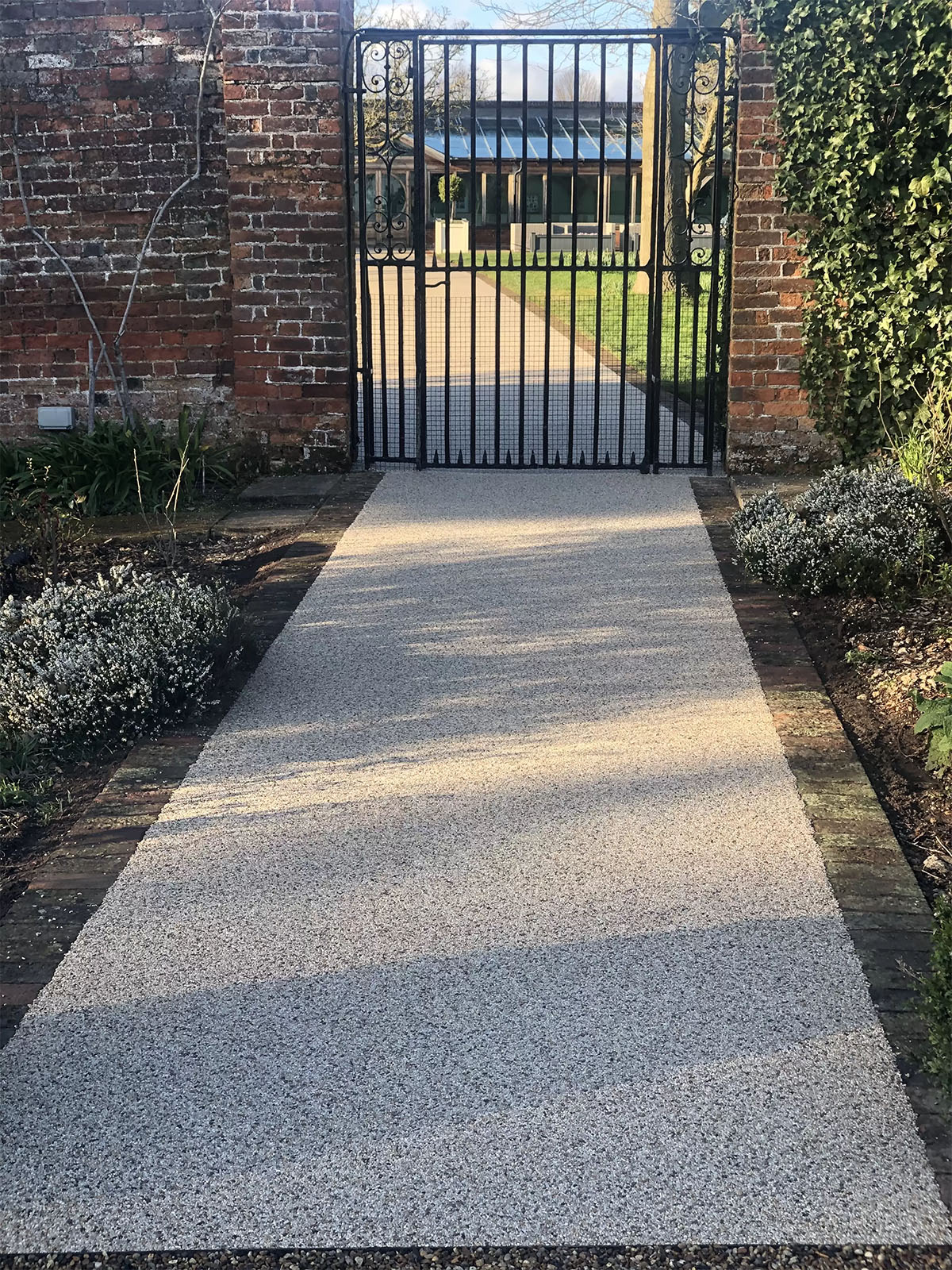
Tar and chip driveways are made by spraying hot bitumen binder over a sound, well compacted base, then spreading stone chippings over it and rolling them in while the binder’s still hot. You get the natural loose stone look of a gravel drive, with the grip and stability of a bound surface.
We call it hot tar and shingle. On the highways the same idea goes by surface dressing. Most people search for tar and chip, so that’s the name we’ll use here.
Harrington Brothers is a family run business with over 50 years in surfacing, based in Blackmore, a short run from Chelmsford. Bitumen is our everyday material. We lay it on driveways, car parks and council roads, so we’re comfortable telling you where a tar and chip driveway works and where it doesn’t.
On this page
Who a tar and chip driveway suits, and who it doesn’t
It suits long drives, country properties and private lanes, where tarmac or block paving the whole length would be a big spend and loose shingle would rut and wander. It also suits anyone who likes the look of gravel but is tired of raking it back off the lawn every Sunday.
The downsides, honestly:
- It isn’t smooth. It’s a textured stone finish. No good for skateboards, and not as kind to bare feet as resin bound.
- Some loose chippings early on. Stone that didn’t bed in gets swept off, and a bit more comes loose in the first few weeks. It settles, but don’t expect a finished floor on day one.
- Tight turning spots take a hammering when it’s new. Turning the steering hard with the car standing still can scuff chippings out while the binder is fresh.
- Patches show. If a section is ever dug up for a pipe or cable, the repair can look different from the rest until it weathers in.
If those put you off, a tarmac driveway in 6mm SMA is smoother and simpler to live with, and a shingle driveway gives you the gravel look with less going on underneath the stone.
What goes underneath, and why it matters more than the chippings
The chippings get the attention, but the base does the work. Tar and chip is a thin surface. It doesn’t add strength; it seals and dresses whatever it’s laid on. Lay it on a weak base and it’ll follow every dip, rut and soft spot underneath, then crack where the ground moves.
A lot of the ground around Chelmsford is clay, which holds water and shifts as it wets and dries. So our survey starts with the base. If there’s an existing tarmac surface or a well compacted stone base that’s sound, it may be possible to lay over it after repairs. If not, we dig out and build a new MOT Type 1 sub-base (graded crushed stone, compacted in layers) before anything hot goes near it. We’ll tell you which it is, and show you why.
Edges matter too. A tar and chip driveway needs something firm to finish against, a kerb, a block paving border or concrete edgings. Without one, the edges are the first thing to fray and break up.
How we lay a tar and chip driveway
- Free survey. We look at the base, the falls, drainage, access and edges, then send a fixed quote in writing.
- Prep. Dig out and new sub-base where it’s needed, or repairs to an existing surface where it’s sound. Edging set.
- Binder. Hot bitumen sprayed evenly over the prepared surface. You’ll smell it, so it’s a good day to keep the front windows shut.
- Chippings. Spread straight over the hot binder before it cools.
- Rolling. Rolled in while the binder’s hot, so the stone beds down and grips.
- Sweep up. Surplus loose stone swept off before we leave, and we’ll tell you how to treat it for the first few weeks.
Most domestic driveways take us 2 to 5 days on site, and most of that is the prep. The hot work itself goes quickly, which is why the weather forecast gets watched closely that week. We agree the schedule with you before we start.
For the first couple of weeks, go easy on it. Drive in and out normally, but don’t spin the steering wheel with the car standing still, and keep skips, trailers and jack stands off it while the binder firms up. You’ll sweep up a few loose chippings in that time. That’s normal. If it’s more than a few, ring us and we’ll come and look.
Looking after a tar and chip driveway once it’s settled
Once the first few weeks are behind it, a tar and chip driveway asks very little of you. A few habits help it last:
- Sweep, don’t blast. A stiff yard brush clears leaves and loose stone. A pressure washer held close can lift chippings out of the binder, so keep the lance well back if you use one at all.
- Watch for diesel and oil. Fuel and engine oil soften bitumen. Soak up a spill with sand or cat litter as soon as you see it, and put a drip tray under a car that leaks.
- Go gently with the snow shovel. A metal blade scrapes chippings out. A plastic shovel and a bit of salt are kinder.
- Heatwaves. On the hottest days the binder softens a touch, so don’t leave a loaded trailer or a skip in the same spot all summer.
- Weeds at the edges. Pull them while they’re small, before the roots get under the edge of the surface.
If a tar and chip driveway starts losing stone in patches after the first year, it’s usually telling you something about the base or the water underneath it. Give us a ring and we’ll come and have a look before it spreads.
Is tar and chip cheaper than tarmac?
It’s the question we get most, and the short answer is yes, on the surface itself. Our tar and chip driveways start from £10 per m², where tarmac starts from £25 per m². The longer answer is that on most jobs the biggest cost is the dig out and sub-base, and that’s the same whatever goes on top.
Where an existing base is sound and can be reused, tar and chip can be a sensible way to get a fresh, grippy finish without starting from scratch. Where the base has to be built, the gap between tar and chip and tarmac narrows. Prices start from the figures shown and are indicative only: the final price depends on the area, access, ground preparation required and material specification. We give a fixed quote after a free, no obligation survey, and we’re happy to price both so you can compare like for like.
If you’d like to spread the cost, have a look at our finance options.
Drainage and planning for a tar and chip driveway in Chelmsford
Treat tar and chip as a sealed surface. The bitumen binds the top, so rain runs off it rather than soaking through the way it does on loose shingle or resin bound. That means the falls matter. We set the levels so water runs to a border, a lawn or a drain on your own land, not towards the house and not out onto the road.
It matters for planning too. On a front garden, laying more than 5 m² of a surface that doesn’t let water through, where it drains onto the road, normally needs planning permission. The Planning Portal guide to paving your front garden explains the rule. Drain it to a permeable area on your own land and it’s usually fine. Conservation areas and listed buildings have their own rules, so tell us if that’s you. A new entrance across the pavement also needs a dropped kerb approved by the council.
For the technical background on the highways side, the Road Surface Treatments Association publishes guidance on surface dressing.
Why ask a surfacing contractor rather than a landscaper
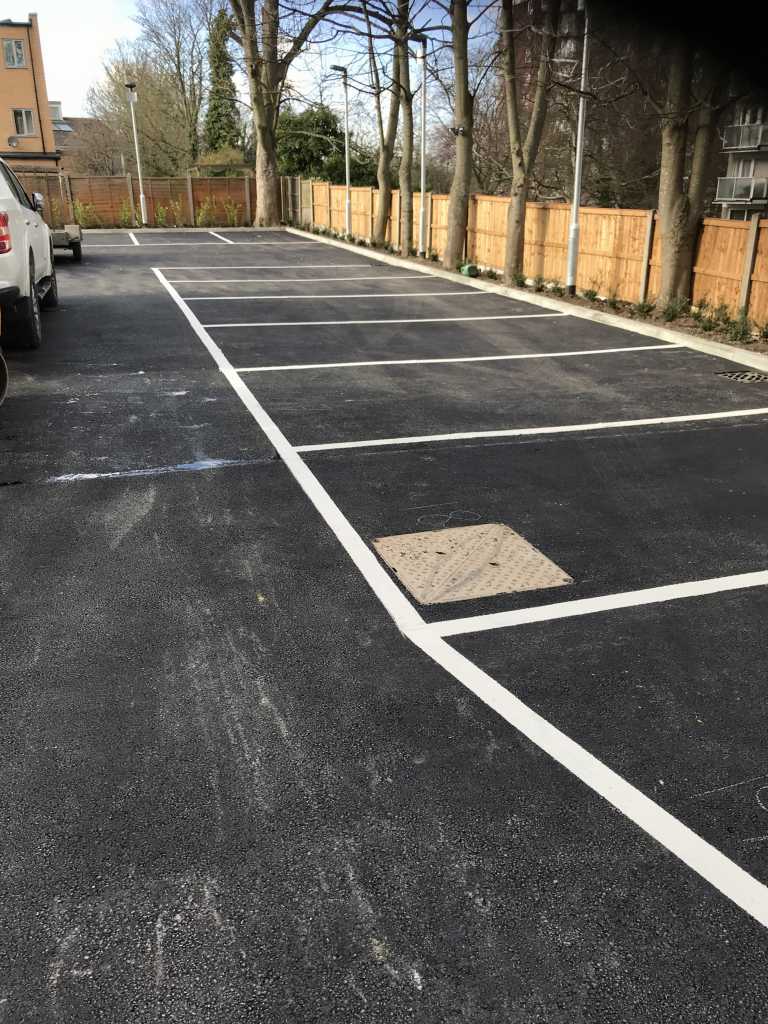
A lot of the firms offering tar and chip driveways around Chelmsford are landscapers who list it next to patios and fencing. Nothing wrong with that, but bitumen rewards people who lay a lot of it. We’re main contractors for local authorities, including Hertsmere, Barnet, Tower Hamlets and Brentwood councils. We resurfaced an 840 m² car park in Ongar in a 55/10 HRA mix with bitumen overbanding on all joints, and we’ve laid tarmac driveways and repaired roads in Chelmsford itself.
That doesn’t turn your drive into a council contract. It does mean the people preparing your base fix failed surfaces for councils, so they know exactly what a failing base looks like before it fails. About 90% of our work comes from referrals and repeat customers. Call 01277 546016 or get in touch for a free, no hassle survey, or see our other services in Chelmsford, or read more on our main hot tar and shingle page.
Hot Tar and Shingle in Chelmsford: your questions
Are tar and chip driveways good?
On the right property, yes. You get a gravel look that stays put and grips well, and it suits long drives and country properties. It’s textured rather than smooth, sheds some loose stone early on, and it’s only ever as good as the base underneath. We’ll tell you at the survey if your drive suits it.
What is the typical lifespan of a tar and chip driveway?
We won’t give you a number off the shelf, because it depends almost entirely on the base, the traffic and how well it was laid. Tar and chip on a weak base can fail early whatever anyone promised. Once we’ve seen your ground, we’ll give you an honest view.
Is tar and chip cheaper than tarmac?
Usually, yes. Tar and chip starts from £10 per m² and tarmac from £25 per m². The gap is widest where a sound existing base can be reused, and narrows where the base has to be built. Both are indicative only until we’ve surveyed, as the final price depends on area, access, ground preparation and material. We’ll price both after a free survey so you can compare.
Can tar and chip go over my existing driveway?
Sometimes. If your existing tarmac or compacted stone base is sound, it may be possible after repairs. If it’s rutted, sinking or breaking up, it needs fixing or rebuilding first, because tar and chip will follow every fault underneath it.
What’s the difference between tar and chip and resin bonded?
Both have stones sitting on top of a binder. Tar and chip uses hot bitumen and gives a natural gravel look. Resin bonded uses a resin layer with decorative aggregate scattered and rolled in, giving a very grippy finish for slopes and ramps. Resin bound is different again: the stones are mixed through the resin and trowelled smooth.
Do I need planning permission for a tar and chip driveway?
Treat it as a sealed surface. More than 5 m² in a front garden that drains onto the road normally needs permission; if it drains to a lawn or border on your own land it usually doesn’t. We set the falls to suit and flag anything we spot at the survey.