Line marking in Chelmsford, done in thermoplastic
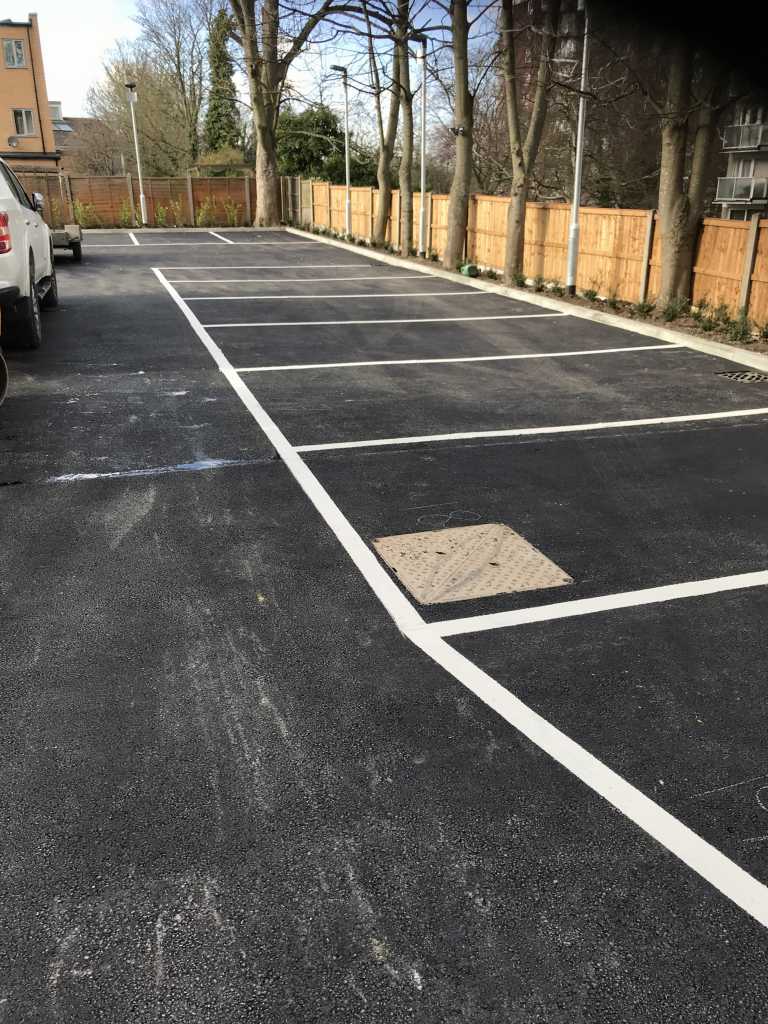
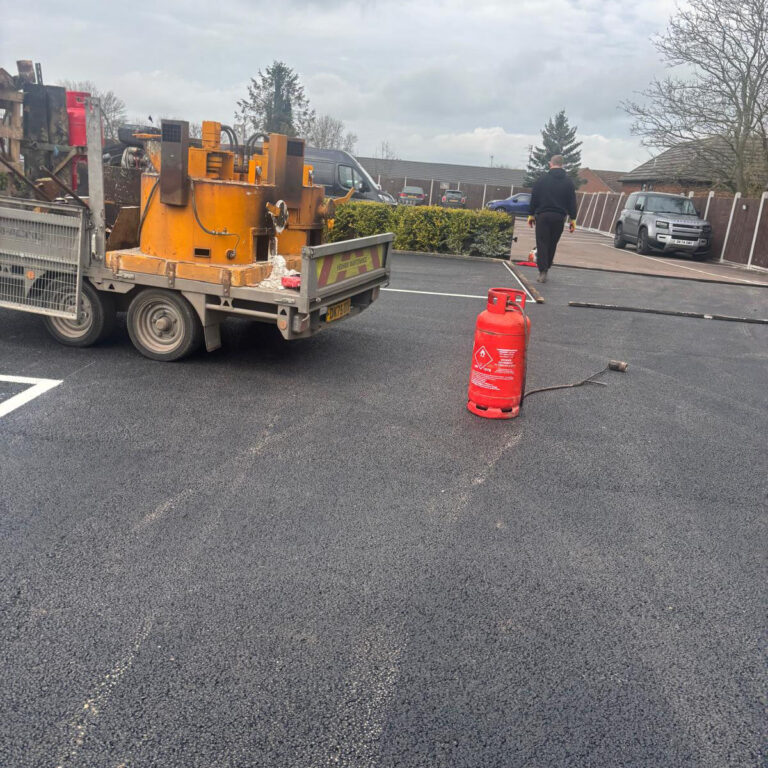
We do line marking in Chelmsford and the towns around it in hot applied thermoplastic, the same material you see on public roads and council car parks. It’s heated in our line marking trailer, laid on while it’s molten and bonds with the tarmac as it cools. You end up with a thick line that’s part of the surface, not a coat of paint sitting on top of it.
Where we differ from most line marking firms is that we’re surfacing contractors first. We’re a family run business with over 50 years laying tarmac, and we’re main contractors for local authorities. So if your car park needs repairs before the lines go down, we do both as one job instead of sending you off to find a second contractor and fit the two of them together.
On this page
Thermoplastic or paint? An honest answer
Paint is cheaper on the day, and we won’t pretend otherwise. If the lines only have to last a short while, or the budget genuinely won’t stretch, paint will do.
On anything that takes daily traffic, thermoplastic wins. It goes down much thicker than paint, it bonds with the tarmac rather than sitting on it, and it doesn’t wear through in the wheel paths after one winter. Painted lines in a busy car park tend to need redoing long before thermoplastic would, so over a few years, paying once usually works out cheaper than painting again and again.
There’s a practical side too. Thermoplastic is the standard for council and commercial work, which means drivers are used to seeing it, and it’s what we lay on our own council jobs.
What we mark out
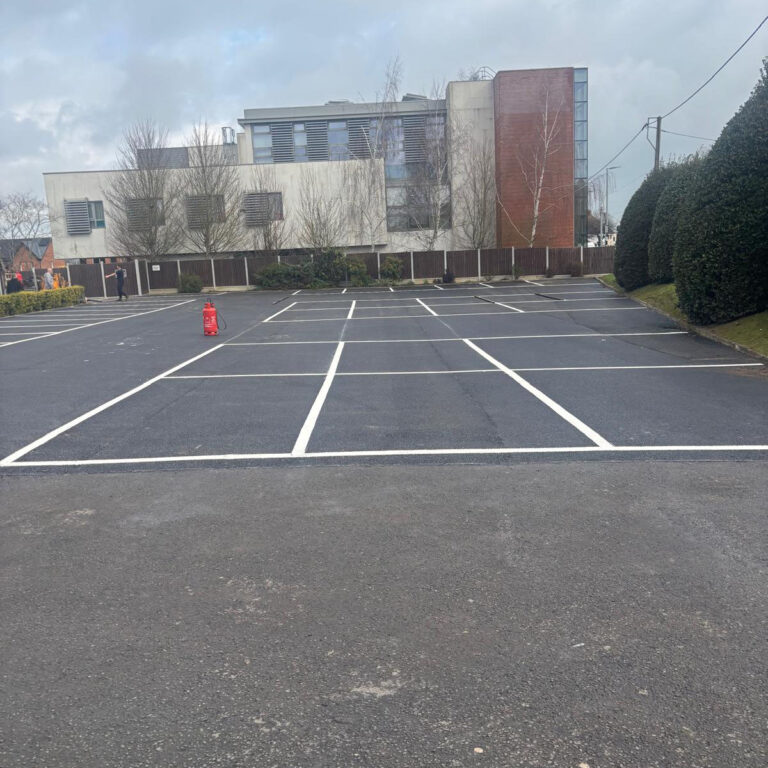
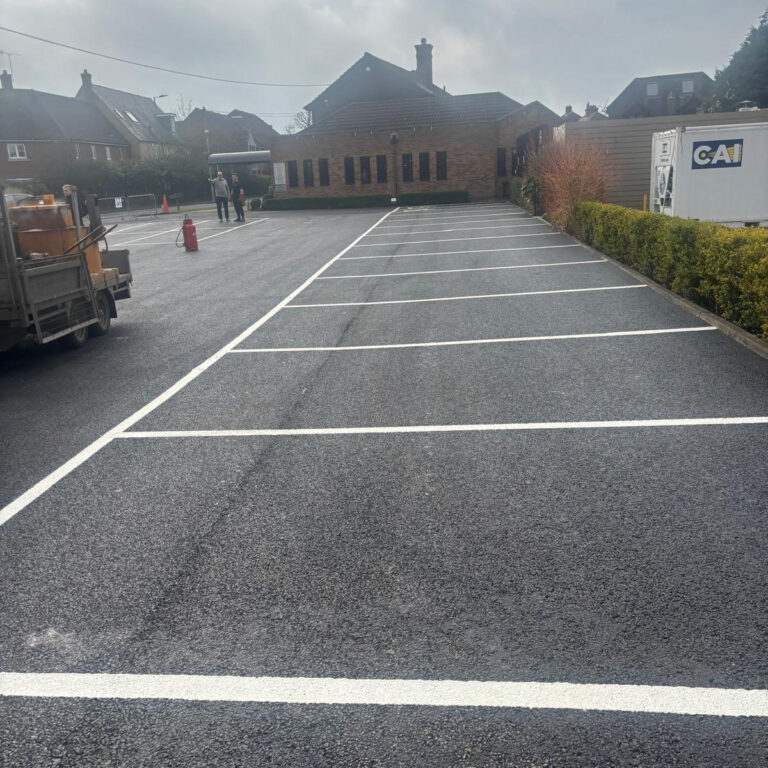
- Parking bays, from a dozen spaces behind a shop to a full depot yard
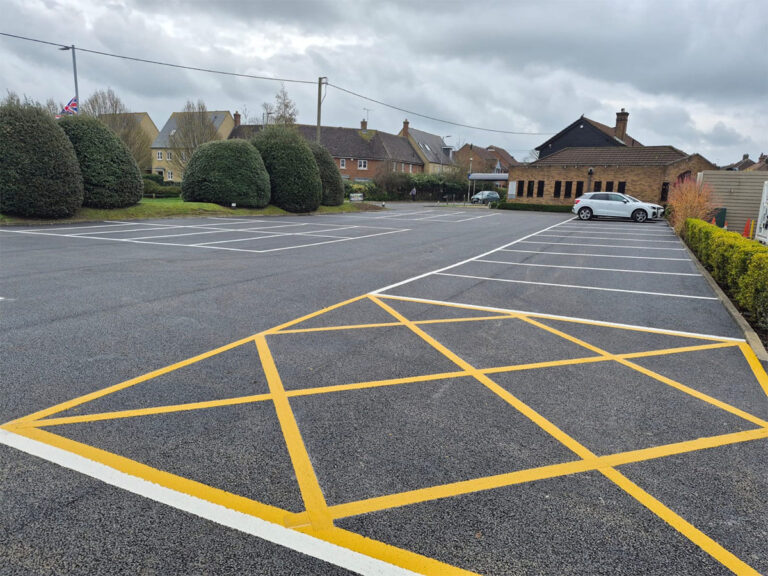
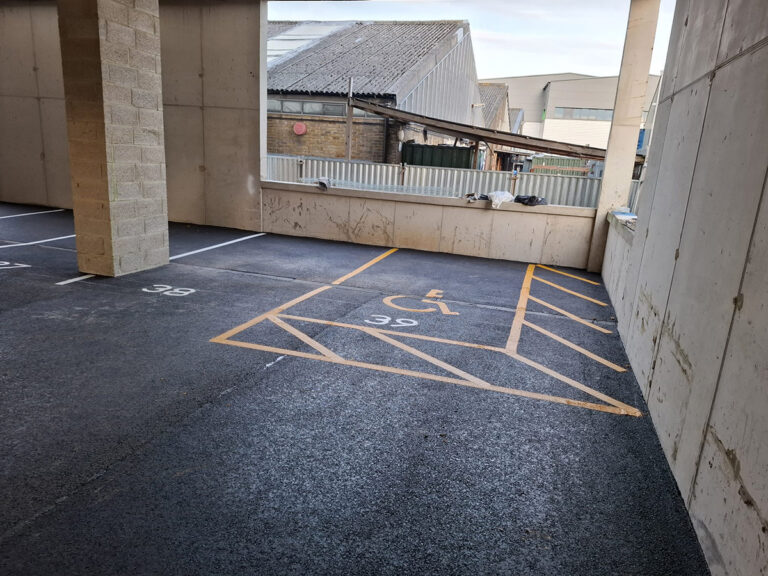
- Disabled bays, laid out with the extra space alongside that wheelchair users need
- Hatching for no parking zones, keep clear areas and walking routes
- Directional arrows to sort out one way systems and entrances
- Loading bays, like the one we lined for a business in West Mersea after repairing their car park in a 55/10 HRA mix
- Road markings on private roads and estate roads
- Schools and depots, where marked routes keep people and vehicles apart
On our Ongar car park job at Smiths restaurant, we marked out the bays, the hatching and the directional arrows in thermoplastic before the car park reopened. That’s the way we prefer to do it: surface and lines as one job, finished in one go.
Don’t put new line marking on a failing surface
This is the most common mistake we come across. A car park looks tired, someone decides to smarten it up with fresh lines, and six months later the new lines are running across potholes and cracks. Thermoplastic bonds to the tarmac, so when the tarmac breaks up, the lines go with it.
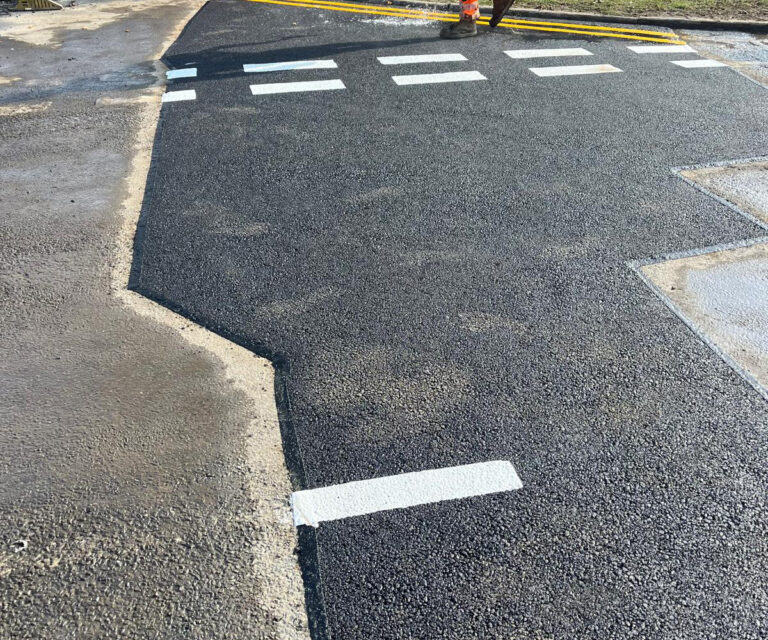
We’ll tell you honestly on the survey whether the surface is fit to line. Often it just needs some patching first: we cut out the failed areas, reinstate them in hot laid tarmac with bitumen overbanding on the joints, then line over the top. We do exactly that where trench work or patch repairs have taken out old markings: tarmac repaired, thermoplastic lines put back. If the whole surface is past it, our car park surfacing in Chelmsford page explains what a resurface involves.
How a line marking job goes on the day
- Layout agreed. Before anything goes down, we agree where every bay, arrow and hatched area sits. Thermoplastic is built to stay put, so changing your mind afterwards is a much bigger job than painting over paint.
- Surface prepared. The area has to be clean and dry. We sweep it, and if it’s been raining we wait. Thermoplastic laid on a damp surface won’t bond properly, and we’d rather lose a morning than come back to lines that are lifting.
- Setting out. We mark the layout on the ground first, so lines run straight and bays come out even from one end to the other.
- Laying. The thermoplastic is heated in the trailer and applied hot. You’ll notice the smell; it’s the same as fresh road markings on the main road.
- Reopening. It sets as it cools, so there’s none of the long drying time paint needs. We’ll tell you on the day when each area can take cars again.
If the site is still trading, we line in sections, so you’re never without parking altogether, and we agree the timings with you beforehand. If we’ve just resurfaced the car park, the lining goes on straight after the tarmac.
Getting the layout right first time
Relining is the cheapest chance you’ll get to fix a layout that never worked. Bays too tight for modern cars, disabled spaces miles from the door, no safe walking route from the parking to the entrance: all easy to change when new lines are going down anyway, and expensive to change a year later.
For accessible bays, the Department for Transport’s Inclusive Mobility guidance sets out recommended sizes and the extra space around them. On a private car park, drivers still read markings the way they read them on the road, so we stick to the same conventions as public road markings, which are set out in the Traffic Signs Manual. Lines that look like the ones on the main road get followed. Homemade ones get ignored.
A few things worth thinking about before we come out, so the survey covers everything in one visit:
- How many bays you need, and if you’d trade a couple of spaces for wider ones that are easier to get in and out of
- Disabled bays: how many, and which door they should sit closest to
- Deliveries: where vans and lorries stop, and whether they need a marked loading bay or a hatched area kept clear
- Walking routes from the parking to the entrance, so people aren’t weaving between moving cars
- Traffic flow: whether a one way system with arrows would stop the jams at the entrance
A rough sketch, or even photos with notes on them, is plenty. We’ll turn it into a layout and walk it with you before any thermoplastic goes down.
Line marking for car parks, schools, depots and private roads
Every site needs something slightly different from its line marking, and the layout should follow how the place is actually used.
Shops, offices and surgeries
Here it’s about squeezing in the bays without making them so tight that doors get dinged, putting the disabled spaces nearest the entrance, and arrows that stop two cars meeting head on at the exit.
Schools
Schools want marked walking routes and hatched areas that keep pupils and parents’ cars apart at drop off and pick up. We’d much rather line a school in the holidays, when the site is empty but we can work around your schedules.
Depots and yards
Lorries need loading bays, hatched no parking zones in front of doors and clear routes for reversing. Line marking takes a hammering here, which is exactly where thermoplastic earns its money over paint.
Private roads
On private and estate roads it’s usually centre lines, give way markings at junctions and keep clear hatching at entrances, often put back after a road repair.
Councils and commercial clients usually want the paperwork too. We’re Constructionline and SafeContractor approved and CHAS accredited, with ten million pounds of public liability insurance, so we tick the boxes procurement teams ask about.
What line marking costs in Chelmsford
You’ll find line marking firms quoting headline figures online. We don’t, because the price depends on things we can’t see from here: how much lining there is, how many arrows and hatched areas, whether the surface needs repairs first, and whether we can do it in one go or have to work round a live car park.
One thing we will say: if you’re having the car park resurfaced, get the lining done as part of the same job. It saves a separate visit and you reopen finished. The survey is free, with no hassle and no obligation, and you’ll get a fixed quote in writing. Call 01277 546016 or ask us to call you back. We cover Chelmsford, Danbury, Maldon, Witham, Braintree, Ingatestone and across Essex, and there’s more about the material on our main thermoplastic line marking page.
Thermoplastic Line Marking in Chelmsford: your questions
How long does thermoplastic line marking last?
Much longer than paint, but there isn’t one number. Lines in turning areas or at barriers wear faster than bay ends nobody drives over. On a sound tarmac surface it lasts for years. On a crumbling one, it goes when the tarmac goes, which is why we check the surface first.
Is thermoplastic better than paint for car park lines?
For anything with daily traffic, yes. It’s thicker, it bonds with the tarmac and it doesn’t wear through in the wheel paths the way paint does. Paint is cheaper on the day and fine for lines that only need to last a short while.
Can you put new lines over the old ones?
Often, if the old lines are sound and in the right place. If they’re flaking, or the layout is changing, we’ll talk through the options at the survey. If the tarmac under them is breaking up, it needs repairing first or the new lines won’t last.
How soon can cars drive on new thermoplastic lines?
Thermoplastic sets as it cools, so it’s far quicker than waiting for paint to dry. We’ll tell you on the day when each area can take traffic again, and on a working site we line in sections so you keep some parking throughout.
Does line marking need a dry day?
Yes. The surface has to be clean and dry for thermoplastic to bond properly. If it’s been raining we’ll wait or rebook rather than lay lines that will lift.
Do I need permission to mark out my own car park?
Generally not, on your own private land. Markings on the public highway are a matter for the highway authority, which in Chelmsford is Essex County Council through Essex Highways, so we don’t mark public roads for private customers.