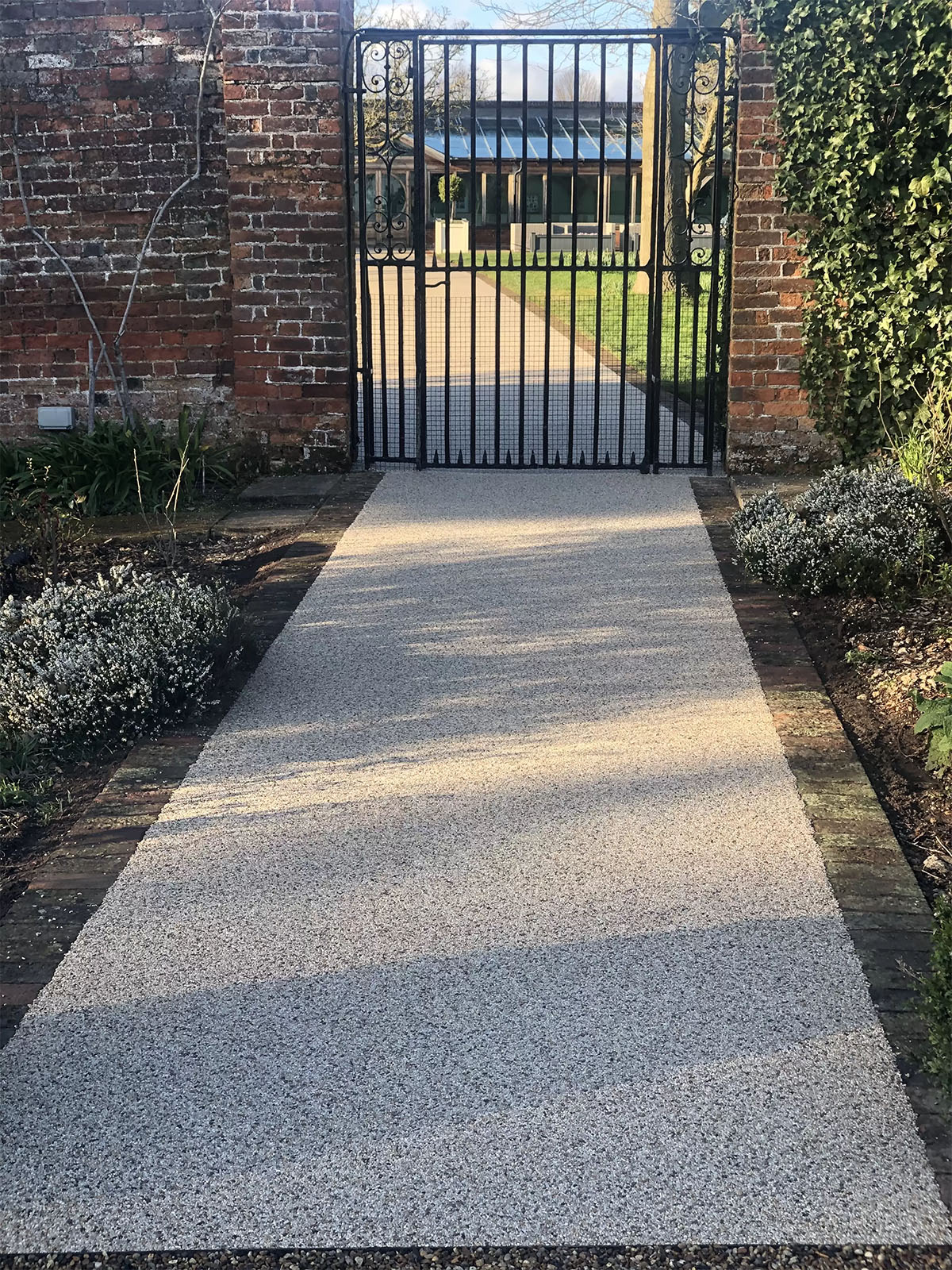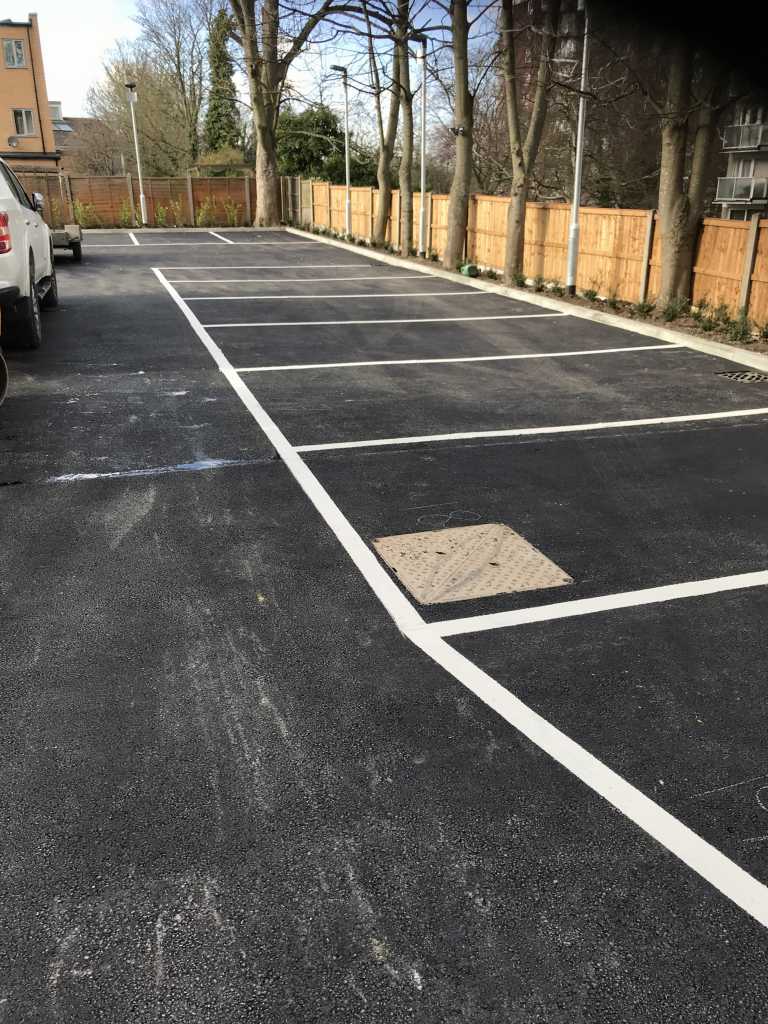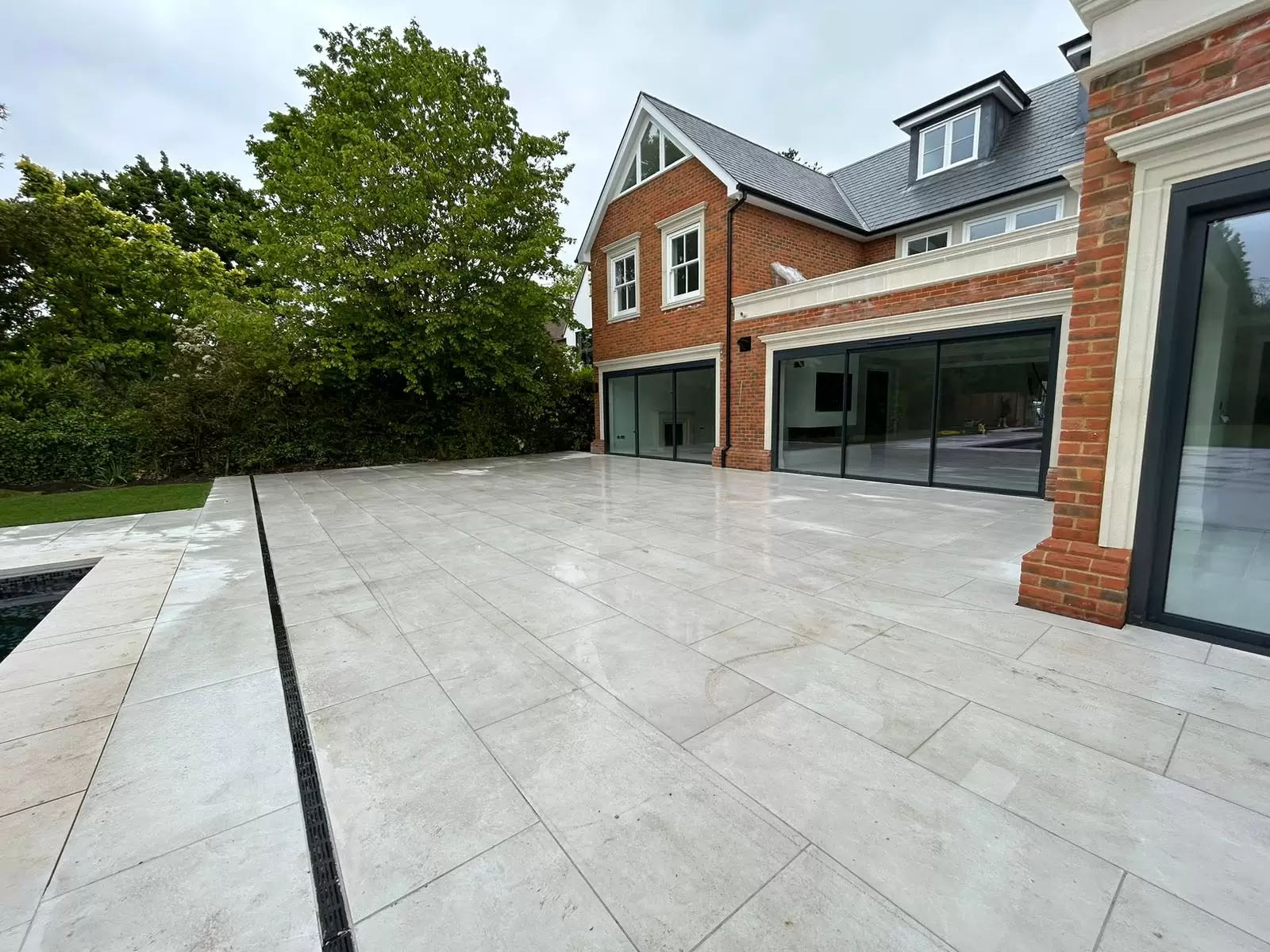
Concrete services we carry out around Chelmsford
Our concrete services mostly sit underneath or alongside other work: a slab for a portacabin, a base for a shed or garage, a sub-base under block paving, or the concrete that goes in with new ACO channel drains. We don’t sell ready mix by the cube. We dig out, prepare, set out, reinforce, pour and finish, and quite often we carry on and lay whatever goes on top.
- Reinforced concrete slabs and foundations
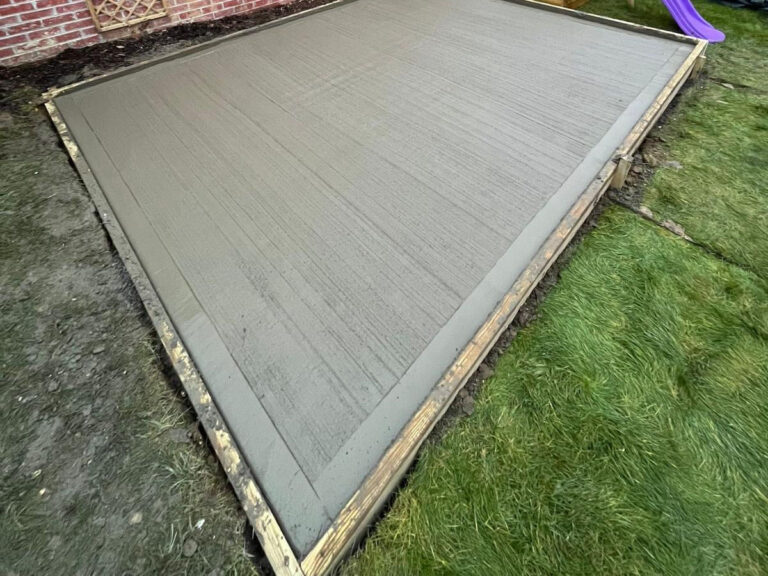
- Shed, garage and outbuilding bases
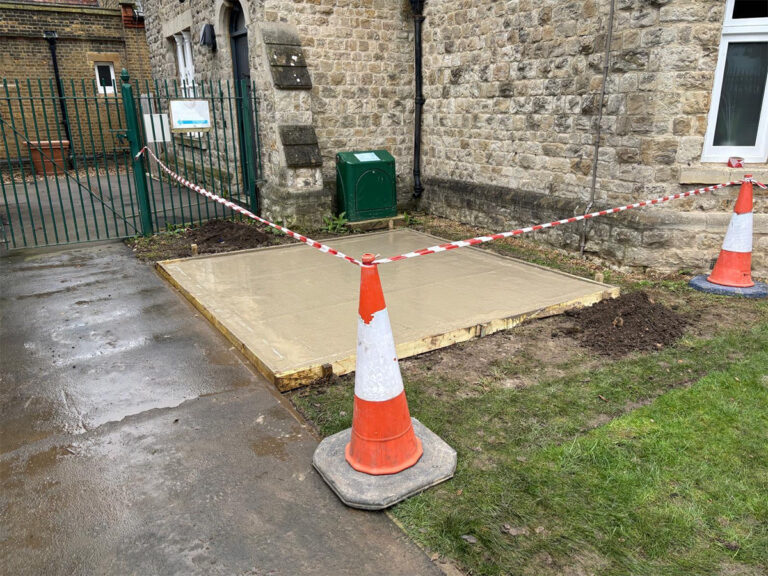
- Portacabin and site cabin slabs
- Concrete sub-bases, including no-fines concrete under permeable paving
- ACO channel drains and soakaways
- Commercial and industrial floors
We’re a family run business with over 50 years in surfacing, based in Blackmore, just outside Chelmsford. That experience counts with concrete more than most trades, because once it’s poured, mistakes are set in stone. Near enough literally.
On this page
What to look for in concrete contractors in Chelmsford
Anyone can pour concrete. The difference between a slab that stays flat for years and one that’s cracked by next winter is almost all in the work you never see.
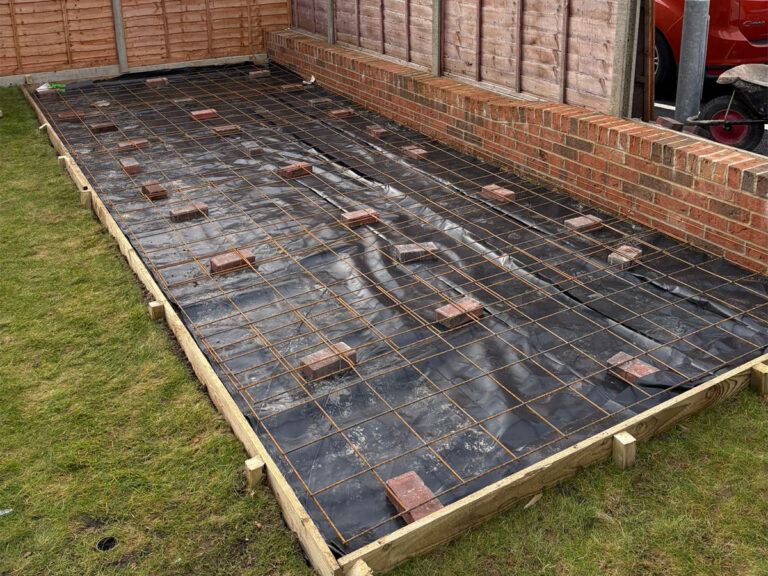
On a typical slab we dig out to firm ground, lay and compact a MOT Type 1 sub-base, and set the edges to the finished level and falls. Then the steel reinforcement goes in, positioned so it sits inside the slab rather than lying on the bottom doing nothing. Only then do we pour, level and finish.
Chelmsford has a lot of heavy clay. Clay swells when it’s wet and shrinks when it dries, and a slab sat on soft clay with a thin skim of hardcore will crack along the weakest line it can find. We’d rather dig deeper and build a proper sub-base than leave that to chance.
So before you sign anything with any of the concrete contractors you’re talking to, ask how deep the sub-base is, whether the slab is reinforced and where the water goes. If the quote doesn’t say, that’s your answer.
Drainage: falls, ACO channels and soakaways
Good concrete contractors think about water before they think about concrete. Concrete doesn’t let water through, so every square metre you pour is rain that has to go somewhere. Get the falls wrong and it ends up against the house, under the garage door or sitting in a puddle in the middle of the slab.
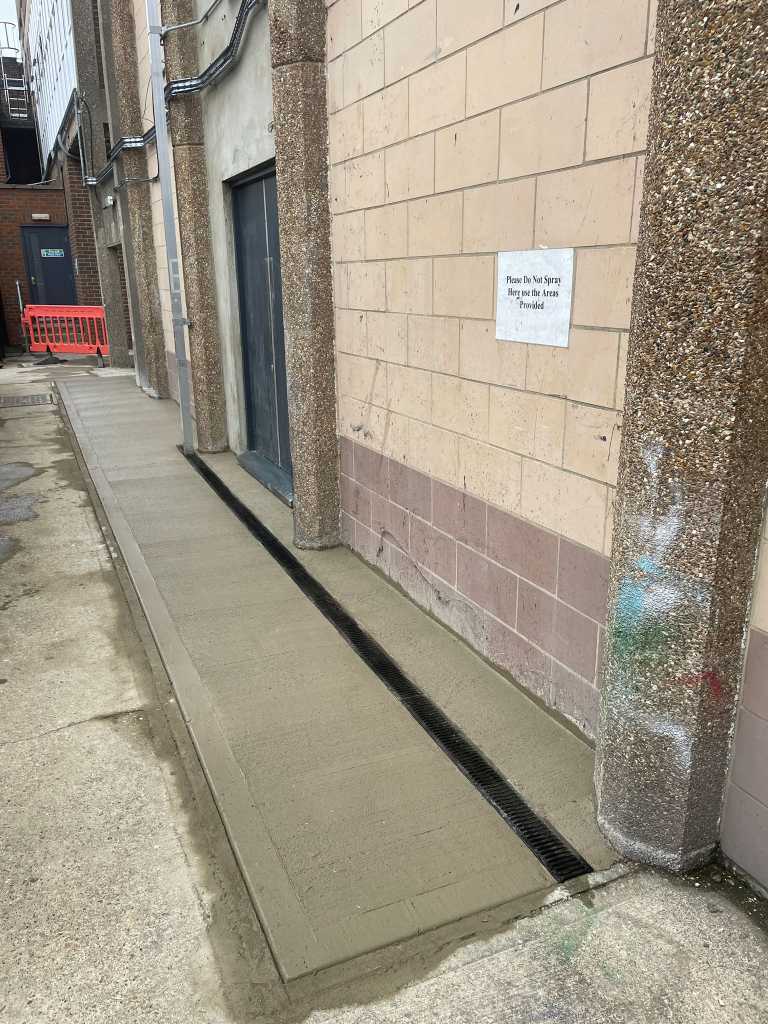
We set a fall on every slab so surface water runs to a drain, a soakaway or a bit of garden that can take it. Where a slab or drive meets a building or a doorway, an ACO channel drain (a slotted channel set flush in the surface) catches the water before it gets there. We’ve installed concrete with ACO drains on domestic and commercial jobs, and sometimes the drainage matters more than the concrete.
On heavy clay a soakaway needs careful thought, because clay doesn’t drain well. We’ll look at the ground at the survey and tell you honestly whether a soakaway will cope or whether the water needs to go to an existing drain.
One for front gardens: covering more than 5 m² with an impermeable surface like concrete, where the water runs off onto the road, can need planning permission. Draining it to a soakaway or your own garden usually avoids that, and we’ll flag it if we spot it.
No-fines concrete under permeable block paving
No-fines concrete is concrete made without the sand, so it’s full of small voids and lets water straight through. We use it as a sub-base under permeable paving, where you need the strength of concrete but don’t want to stop the rain soaking away. One of our jobs was exactly that: a no-fines concrete base with tegular block (a concrete block with a chamfered top edge) laid over it, finished nice and tidy.
If you’re weighing up permeable paving, Interpave has good guidance on how the layers work together. For the paving itself, have a look at our block paving in Chelmsford page.
Concrete or something else? Our honest view
We’ll pour concrete wherever it’s the right material, but it isn’t always. Shed bases, garage floors, cabin slabs, bin stores and anything carrying a heavy load that stays in one place: concrete every time. Industrial floors and yards where forklifts turn: concrete again.
For a domestic driveway, though, we’d usually steer you elsewhere. A plain concrete drive is hard to repair neatly, it doesn’t drain, and when it cracks it shows. Tarmac driveways start from £25 per m² and block paving from £60 per m², and both are easier to patch or lift later. Those prices start from the figures shown and are indicative only: the final price depends on the area, access, ground preparation and material specification, and we give a fixed quote after a free, no obligation survey.
We’ll also tell you when the concrete you’ve already got doesn’t need replacing. Tired concrete that’s sound underneath can sometimes stay as a base for a new surface, which saves you paying to break it out and cart it away.
Pouring concrete in winter and summer
Concrete is fussier about the weather than people expect, and it’s one of the things good concrete services build into the programme rather than leave to luck.
In cold weather the worry is frost. Fresh concrete is full of water, and if that water freezes before the concrete has gained enough strength, the surface can scale and flake. We won’t pour onto frozen ground, and in a cold snap we’ll cover a new slab to keep the frost off it for the first few days, or move the pour.
In a hot, dry spell the problem flips. The surface dries out faster than the concrete underneath, and that’s when you get fine shrinkage cracks across the top. Keeping a new slab damp and covered while it cures stops it drying too fast. It sounds fussy. It’s the difference between a slab that looks nice and tidy in five years and one that’s crazed all over.
Either way, we’ll tell you what we’re doing about the weather on your job and why. Concrete contractors who pour whatever the forecast says are saving themselves a day, not saving you anything.
What a concrete slab costs
We don’t publish a price per square metre for our concrete services, because the concrete is rarely the expensive bit. Digging out, carting away spoil, the depth of sub-base your ground needs, the reinforcement, the drainage and how far it’s barrowed from the lorry all move the price far more than the mix does.
People often ask what a 12 by 12 slab costs. The honest answer is that a 12 by 12 foot shed base on firm ground with easy access, and the same size on soft clay at the bottom of a garden with no side access, are two very different jobs. We’ll come out, look at the ground and give you a fixed quote in writing, free and with no obligation. Call 01277 546016 or get in touch here.
How a concrete job runs
Survey. We measure up, check levels and access, look at the ground and ask what the slab is for. A garden shed and a portacabin need different thicknesses and reinforcement.
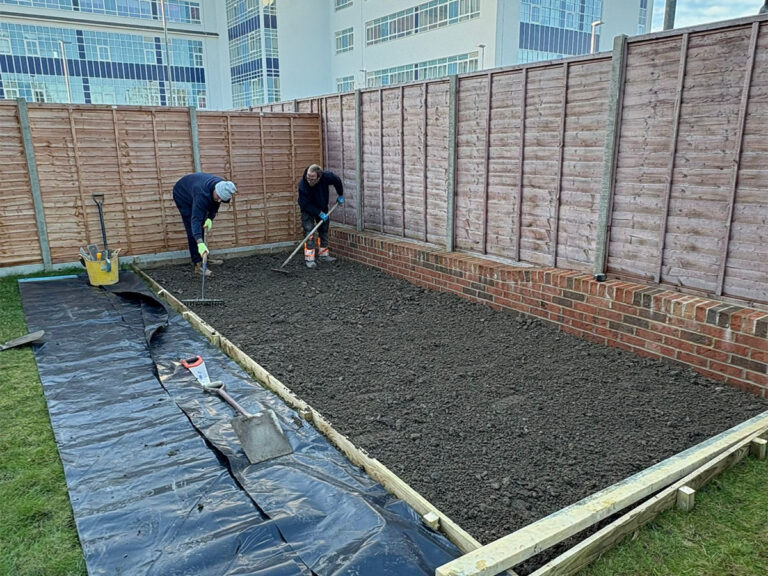
Prep. Dig out, cart away spoil, lay and compact the sub-base, set the edges and falls. Any drainage goes in now, before concrete covers the route.
Pour day. Reinforcement goes in and gets checked, then the concrete is poured, levelled and finished. It’s loud while the lorry’s running and quiet after.
Curing. Concrete keeps gaining strength for weeks after the pour. We’ll tell you when you can walk on it, when you can build on it and when it’s ready for a vehicle, because those aren’t the same day.
Bigger commercial pours are planned with you around site access and deliveries. As main contractors for local authorities with ten million pounds of public liability insurance, we’re used to live sites with the public close by. If you’re comparing concrete contractors for a commercial job, ask each one for their insurance certificate and method statement before you compare prices. Our main concrete services page covers the work we do further afield, and The Concrete Centre’s technical guidance is there if you want the engineering detail.
Concrete Services in Chelmsford: your questions
What is the 4 2 1 rule for concrete?
It’s an old rule of thumb for mixing by hand: four parts coarse aggregate, two parts sand, one part cement. Fine for setting a post. For a slab or base that carries weight, the mix should suit the job, and the prep underneath matters more than the ratio.
What is the most environmentally friendly concrete?
It depends what you’re measuring. From a drainage point of view, the one we’d point to is no-fines concrete: there’s no sand in it, so rainwater passes through and soaks away instead of running off. We use it as a sub-base under permeable block paving.
How much does a 12×12 concrete slab cost in the UK?
There’s no honest fixed answer. Ground conditions, sub-base depth, reinforcement, drainage and access change the price far more than the size does. We give a fixed quote in writing after a free, no obligation survey.
Do you install ACO drains?
Yes. We fit ACO channel drains where a slab or drive meets a building or doorway, and we install soakaways where the ground can take the water. On heavy clay we’ll tell you honestly if a soakaway won’t cope.
Do you lay shed and garage bases?
Yes, on a compacted MOT Type 1 sub-base with steel reinforcement where the load needs it, set level or to a fall as required. We also pour portacabin and site cabin slabs.
How long before I can use a new concrete slab?
Concrete keeps gaining strength for weeks after the pour, so walking on it, building on it and driving on it come at different times. We’ll give you the dates for your slab when we finish.